Council Grants and Community Infrastructure Funding: Plan Your Park Project
Explore community infrastructure funding for parks, playgrounds and recreation. Check grant pathways, see Anzac Park and prepare your project brief.
See realistic installed package ranges, what each budget includes and the school-specific costs that move the final price.
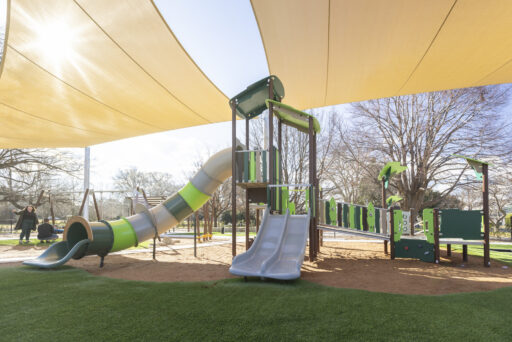
Play equipment that is suitable for school use can start from a few thousand dollars, but in practice, a complete school playground that is installed, with compliant under-surfacing can cost around $50,000 for a compact installed package, $80,000 to $165,000 for a larger primary school project, or more than $200,000 for a major multi-zone playground.
Those figures are useful, but they only make sense when you know what is included.
A school can spend the same total budget in many different ways. One project may put most of the money into equipment and use organic playground surfacing. Another may choose less equipment and spend far more on synthetic playground surfacing, accessible paths or difficult site works.
School playgrounds also work hard. Hundreds of students can arrive at once during recess and lunch. The design needs enough activities, clear entry and exit points, age-appropriate challenge, good teacher sightlines and materials that can handle heavy daily use.
The examples below include supply and delivery, installation and the stated surfacing allowance. They do not automatically include shade, fencing, seating, landscaping, demolition, drainage, edging or difficult site preparation.
All figures are in Australian dollars, exclude GST and are indicative. Prices and ranges were last reviewed in August 2026. Your final price will depend on product selection, location, access, ground conditions and project scope.
Indicative installed package
Indicative installed package
Indicative installed package
Indicative installed package
These are installed package ranges like the examples below. They are not necessarily complete schoolyard prices.
Equipment price: Playground structures and freestanding play items. It excludes freight, installation and surfacing unless the quote says otherwise.
Installed playground package: Equipment, delivery, installation and the nominated surfacing. The examples in this guide use this type of budget.
Complete schoolyard project: The installed playground plus demolition, drainage, concrete, edging, shade, fencing, accessible paths, seating, gardens and other schoolyard work included in the agreed scope.
For early planning, allow about half of the total project budget for playground equipment. Equipment may take a larger share on a flat site with loose-fill (particulate) materials. It may take a smaller share when the project includes tiles or unitary surfaces, difficult earthworks, drainage, shade, fencing, paths or landscaping.
This is a starting point, not a quoting formula.
Moduplay’s live pricing shows standard product pricing separately. Freight, installation and project work still need a site-specific quote.
01
A Foundation to Year 2 zone needs a different scale and type of challenge from a Years 3 to 6 or secondary space.
02
Capacity matters as much as the number of products during short break periods.
03
Sightlines, entry points and connected zones should be part of the brief.
04
Plan physical access, sensory choice, social play and quiet areas from the start.
05
Confirm whether the approved figure is for equipment, an installed package or the complete schoolyard upgrade.
06
Plan the final layout, drainage, paths, fall zones and future connections before stage one is built.
These are installed package examples. They use the approved Moduplay concept allowances and assume a flat, workable site with ideal access and ground conditions.
plus GST
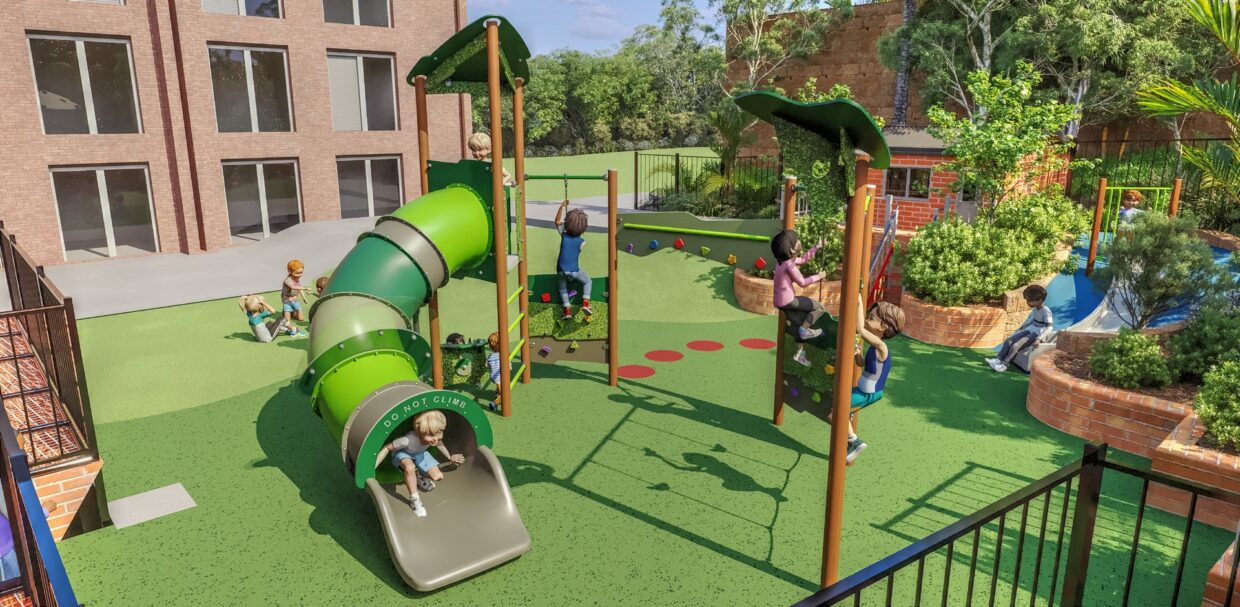
This is a practical entry point for a smaller junior-primary zone, a targeted replacement or a school with a limited footprint.
Equipment: 52% of total
$30,000
Installation: 14% of total
$8,000
Surfacing: 34% of total
$20,000
Indicative total
plus GST
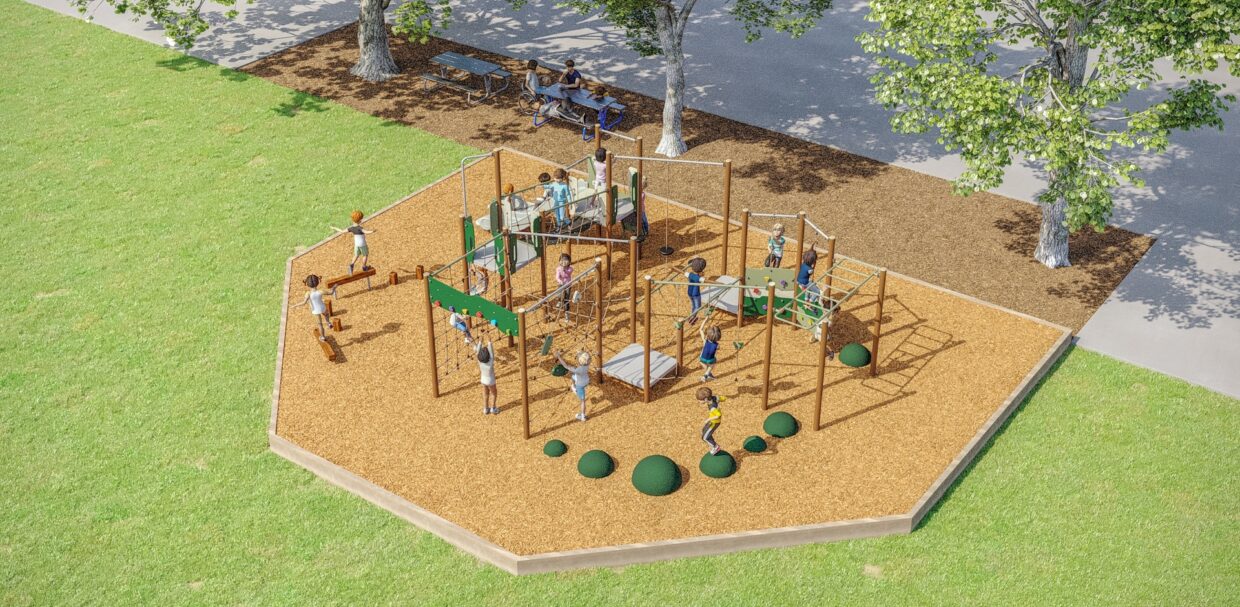
This example directs most of the budget into the play equipment. The lower surfacing allowance makes room for a larger, more adventurous play offer.
Equipment: 72% of total
$63,000
Installation: 18% of total
$16,000
Surfacing: 9% of total
$8,000
Indicative total
plus GST
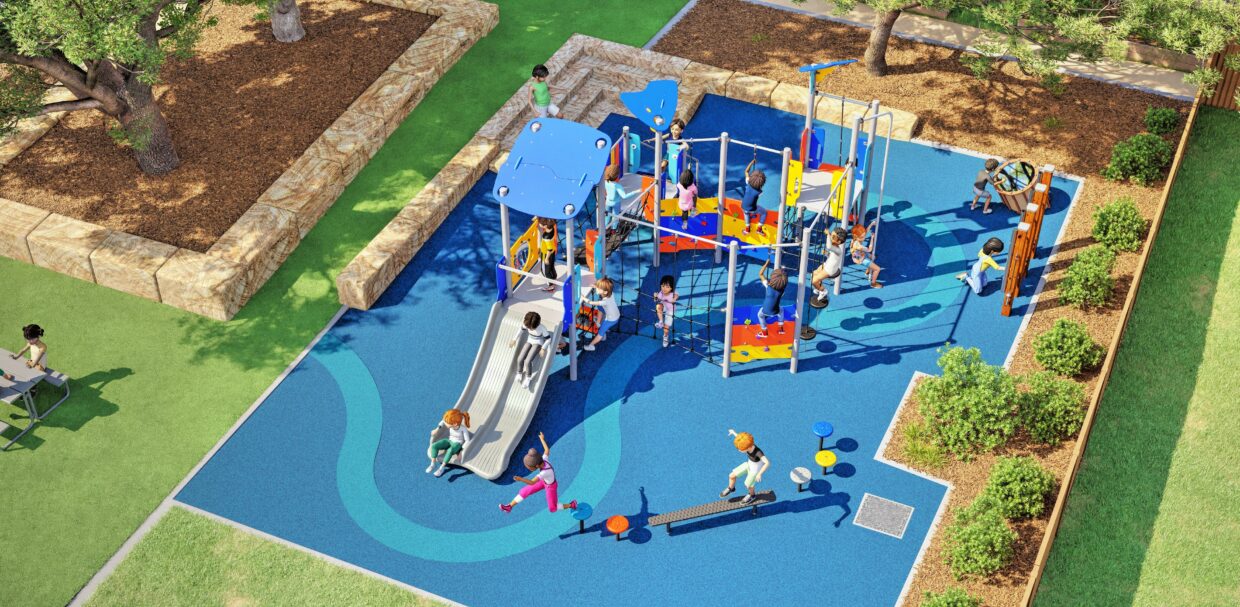
This budget balances the equipment scope with a more substantial surfacing package. It suits schools that want a distinct design, multiple activity types and a firmer finished area.
Equipment: 58% of total
$55,000
Installation: 16% of total
$15,000
Surfacing: 26% of total
$25,000
Indicative total
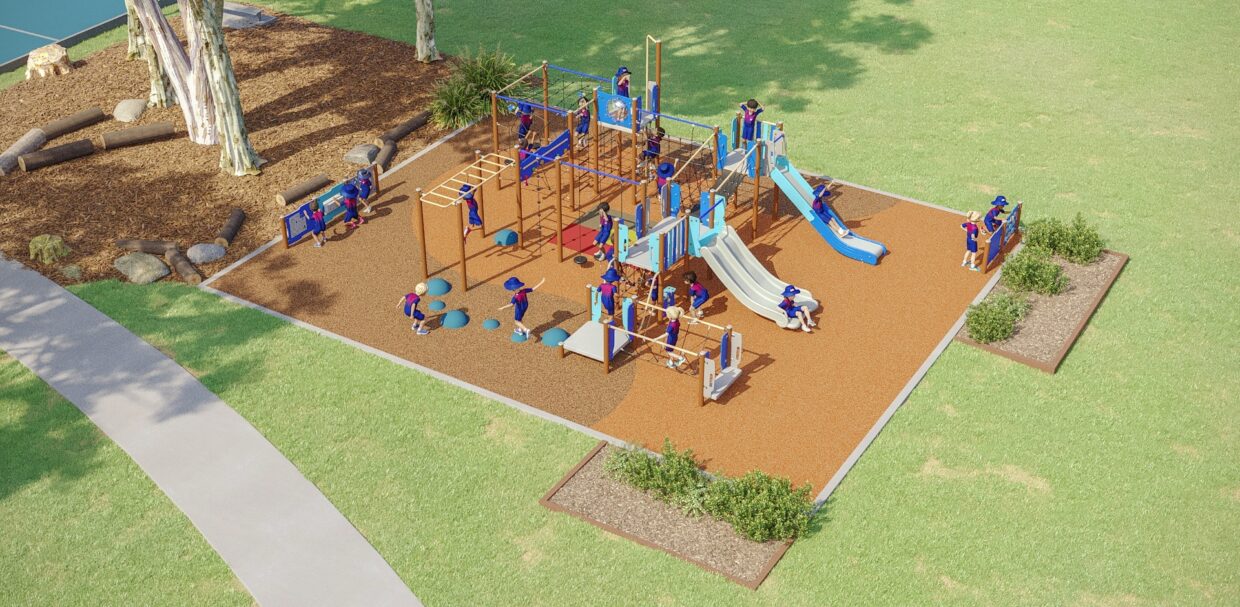
Related School Project
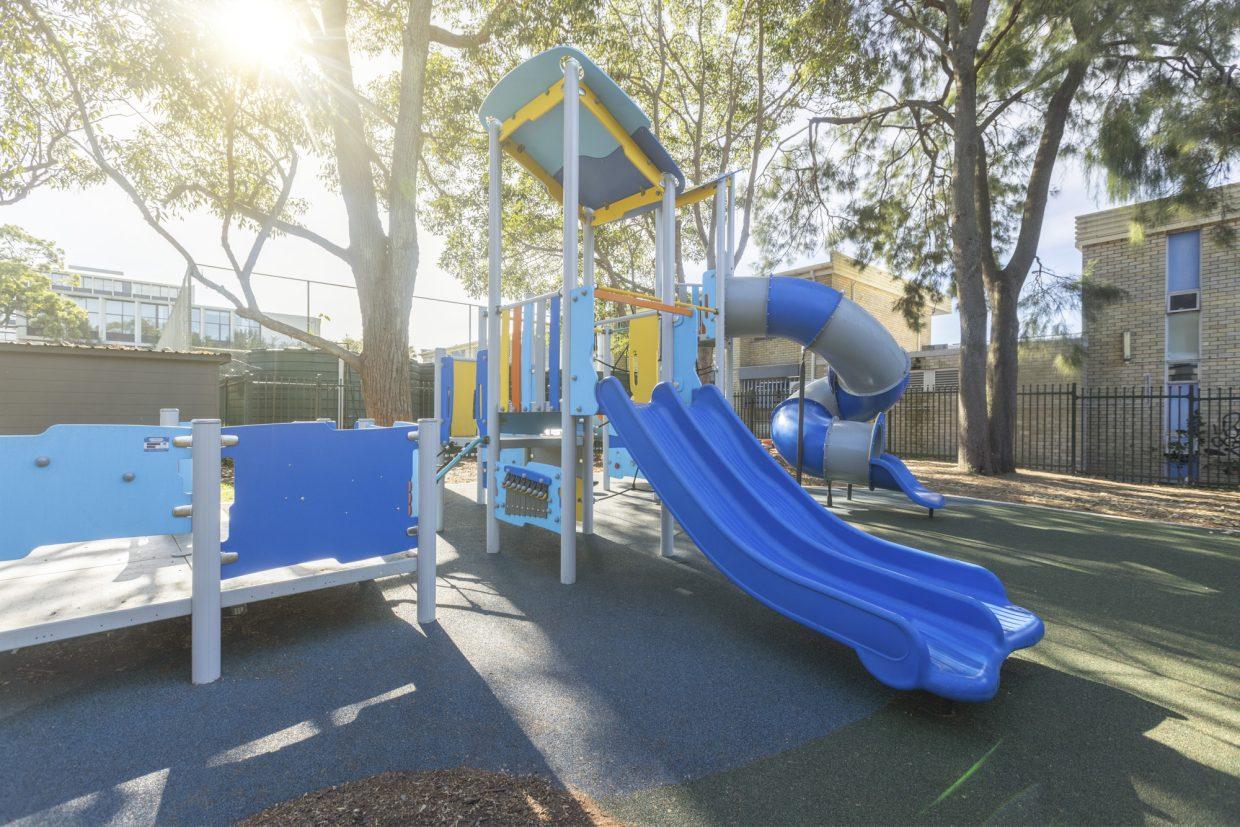

Randwick, NSW
Published Equipment Budget: $70,000 to $80,000
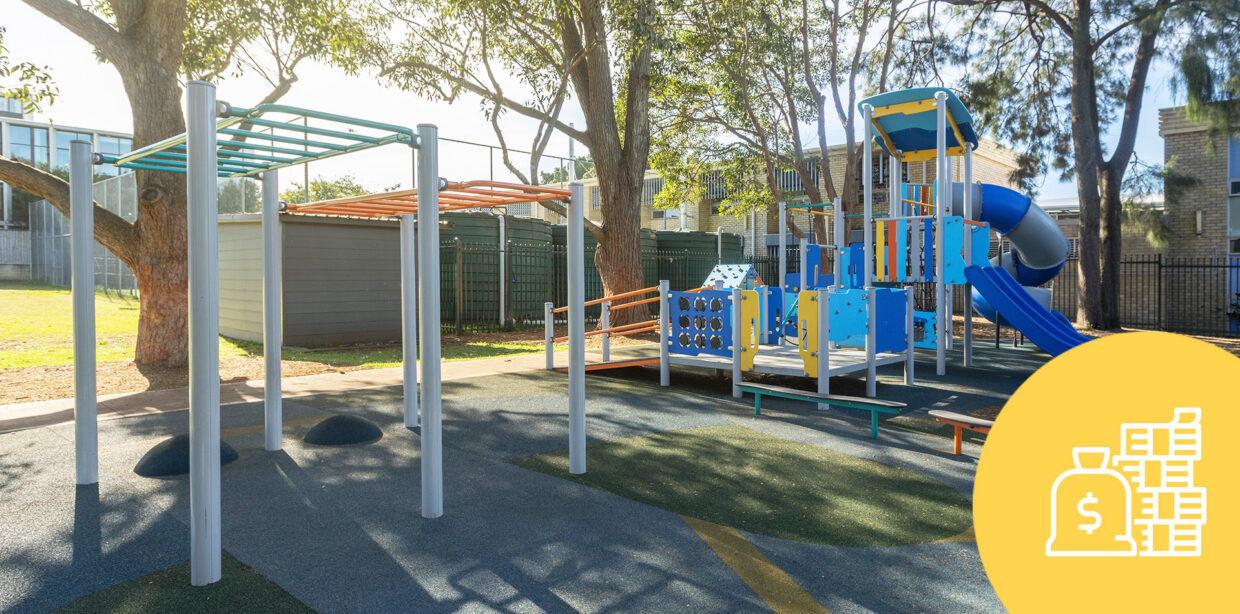
Delivered end-to-end by Moduplay, the new playspace at Rainbow Street Primary School turns a previously underutilised corner of the grounds into a fresh, purpose-built play zone. Notes of blue echo the school uniform, giving the space its own unmistakable identity. Already well-used and well-loved, it’s the perfect finishing touch to the school’s play offering.
plus GST
This is a larger school project with enough budget for a strong equipment package and a sizeable continuous surfacing area.
Equipment: 52% of total
$75,000
Installation: 15% of total
$22,000
Surfacing: 33% of total
$47,000
Indicative total
Related School Project
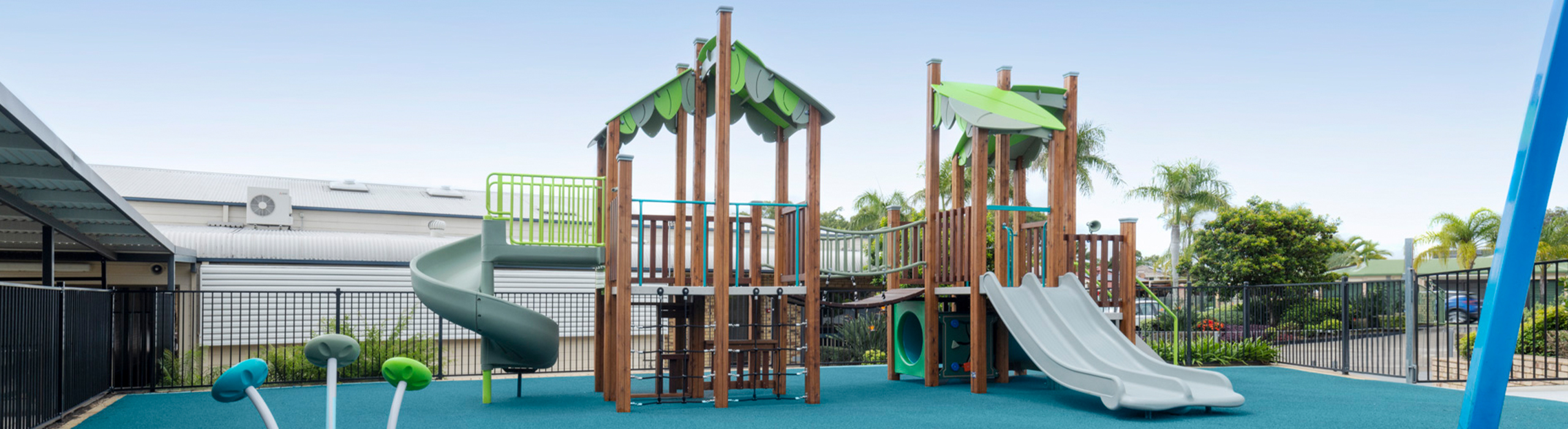
Rothwell, QLD
Published Equipment Budget: $100,000 to $120,000
Nestled on the Northside of Brisbane, Mueller College is now home to not one, but TWO new Moduplay play areas for their Primary & Prep areas.
plus GST
This example shows how strongly surfacing can shape the total. The surfacing allowance is almost as large as the equipment allowance.
Equipment: 43% of total
$70,000
Installation: 17% of total
$27,000
Surfacing: 40% of total
$64,000
Indicative total
Related School Project
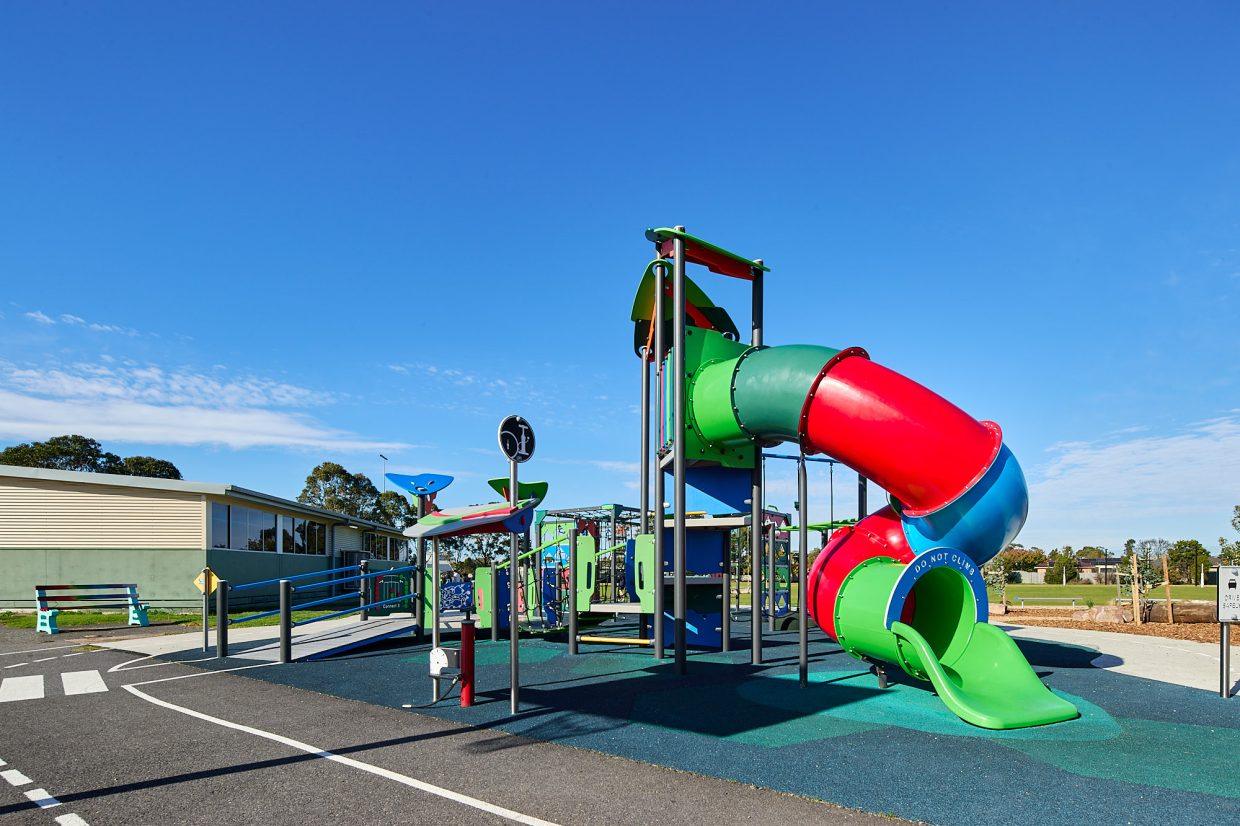
Koo Wee Rup, VIC
Published Equipment Budget: $94,000 to $98,000
Koo Wee Rup Primary School’s brand new recreation space was designed to give every student a genuine way to join in. Completed in May 2025, the project combines an inclusive playground, challenging climbing equipment and a learn-to-ride circuit, creating opportunities for children of different ages, abilities and play preferences to have fun together.
plus GST
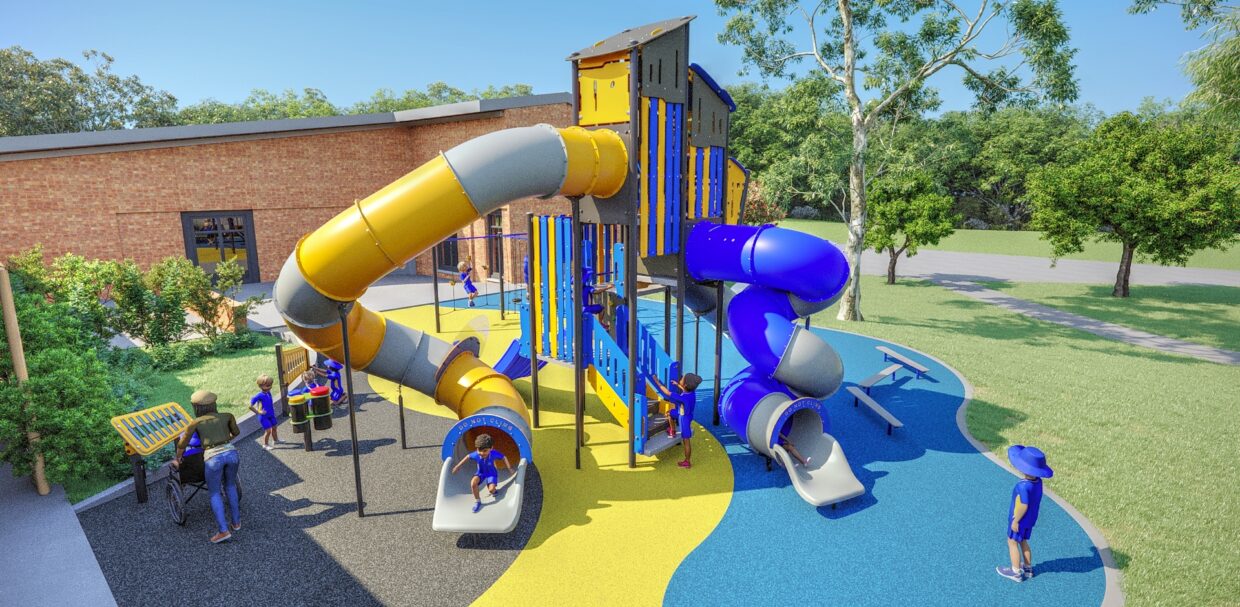
At this level, a school can create a major playground with a large equipment package, higher capacity and several types of play.
Equipment: 60% of total
$123,000
Installation: 11% of total
$22,000
Surfacing: 29% of total
$59,000
Indicative total
Related School Project – Coming Soon
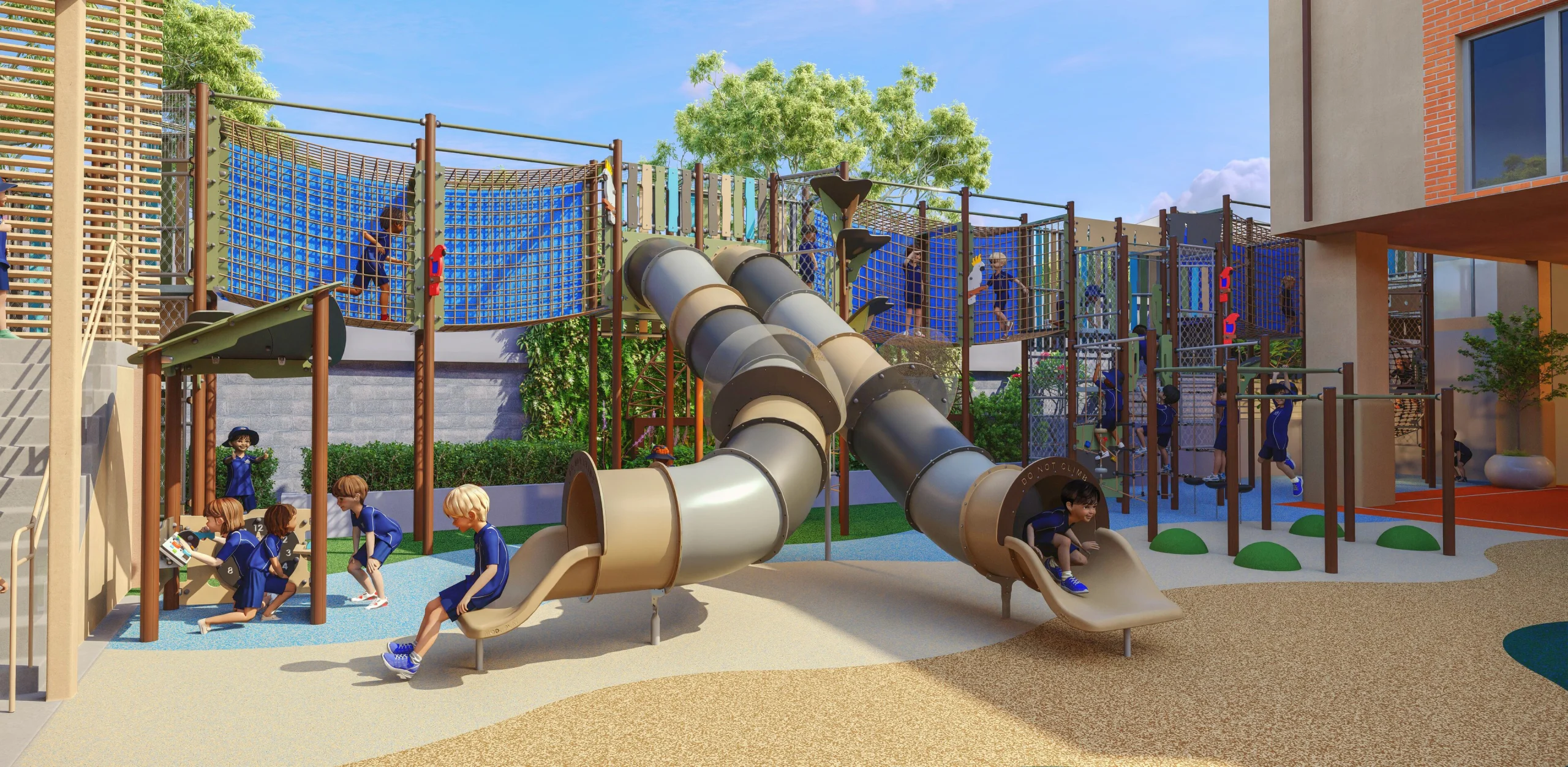
North Sydney, NSW
A custom Connect Tower with rope bridges linking multiple towers, plus a junior play area beneath. The layout has been designed around a compact footprint within a unique and complex existing site.
School playground budgets need to handle peak use, varied age groups and school-site constraints. These six factors usually shape the final scope.
01
School playgrounds have short, intense periods of use. A design needs enough activities that students can use at the same time. Look for multiple entry and exit points, parallel climbing routes, open rope play and activities that do not depend on one child finishing before the next can start.
02
Foundation to Year 2 students generally need lower-scale equipment, simple movement, sensory play, role play and clear supervision. Years 3 to 6 usually need more climbing, upper-body challenge, balance, speed and choice. Separate or overlapping zones usually work better than forcing one compact structure to suit everyone.
03
School sites can be harder to build in than open parks. Delivery routes may pass through gates, car parks, covered walkways or active learning areas. Removing old equipment, concrete, edging or unsuitable fill can add cost before the new playground starts. Rock, roots, poor drainage and underground services can also change footing and excavation costs.
04
A larger fall zone means more surfacing, even when the equipment price stays the same. Loose-fill (particulate) materials are usually cheaper upfront. Tiles and unitary surfaces cost more but can create a firm surface, support clearer routes and reduce daily displacement. Inclusive design also needs firm routes, sensory choice, social play and activities at different heights and challenge levels.
05
Shade, perimeter fencing, gates, accessible paths, seats, outdoor classrooms, drinking fountains and landscaping can materially change the final cost. Decide whether this is a playground replacement or a broader schoolyard upgrade. They are different scopes.
06
Holiday installation can reduce disruption, but it creates a fixed construction window. Allow time for design approval, procurement, manufacturing, service locating, site preparation, installation, surfacing, inspection and handover. Confirm who provides the inspection, surfacing documentation, maintenance manuals, as-built information and warranty records.
Where equipment has a free height of fall, the layout may require impact-attenuating surfacing. The 3 working categories are loose-fill (particulate) materials, tiles and unitary surfaces. Final product mapping and technical requirements must be confirmed for the selected equipment and project specification.
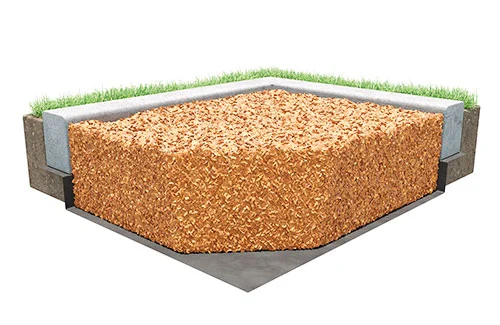
(Particulate) materials – wood chip or sand
Need raking, depth checks, top-ups and clear edging. They are less suitable as the only route for wheeled mobility.
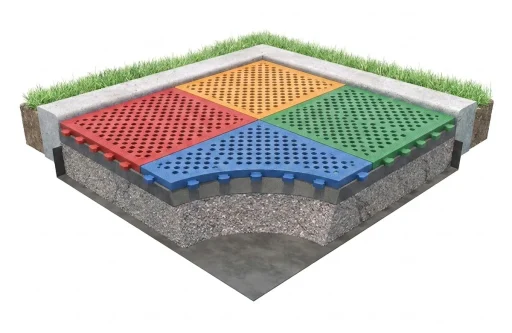
Rubber impact-attenuating tiles manufactured before installation
Need a prepared base and site-specific installation details. Product build-up and permitted claims must be confirmed before use.
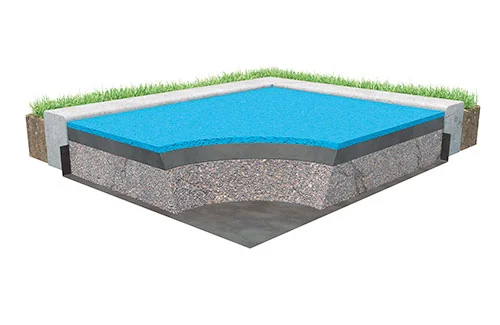
Wetpour and complete multi-layer systems where technically accurate
Can support firm access, patterns and shapes. Cost changes with area, fall height, colours and base preparation.
A project can combine categories to target firm access, impact areas and high-wear zones without using the same surface everywhere.
Yes. Plan the final layout first so future fall zones, paths, drainage and equipment connections are protected. Start with the age group or capacity problem creating the most pressure. Make every stage safe and useful on its own, and avoid temporary surfacing or edges that need to be removed later.
Funding commonly comes from school capital budgets, P&C or P&F fundraising, community sponsorship and grants.
Do not start fundraising with a product list. Start with a clear scope, a target total, a contingency and a staged fallback plan. Grant programs and eligibility change, so check the live source at the time rather than relying on an old list in an article.
These completed projects show how different schools handled capacity, access, landscape conditions and the wider play brief. Their final costs are not published in this article.
Randwick, NSW
Inclusive layout with ramps, rubber surfacing and varied play from Kindergarten to Year 6.
Koo Wee Rup, VIC
Designed for peak use, with 28 activities and capacity for around 50 to 60 children.
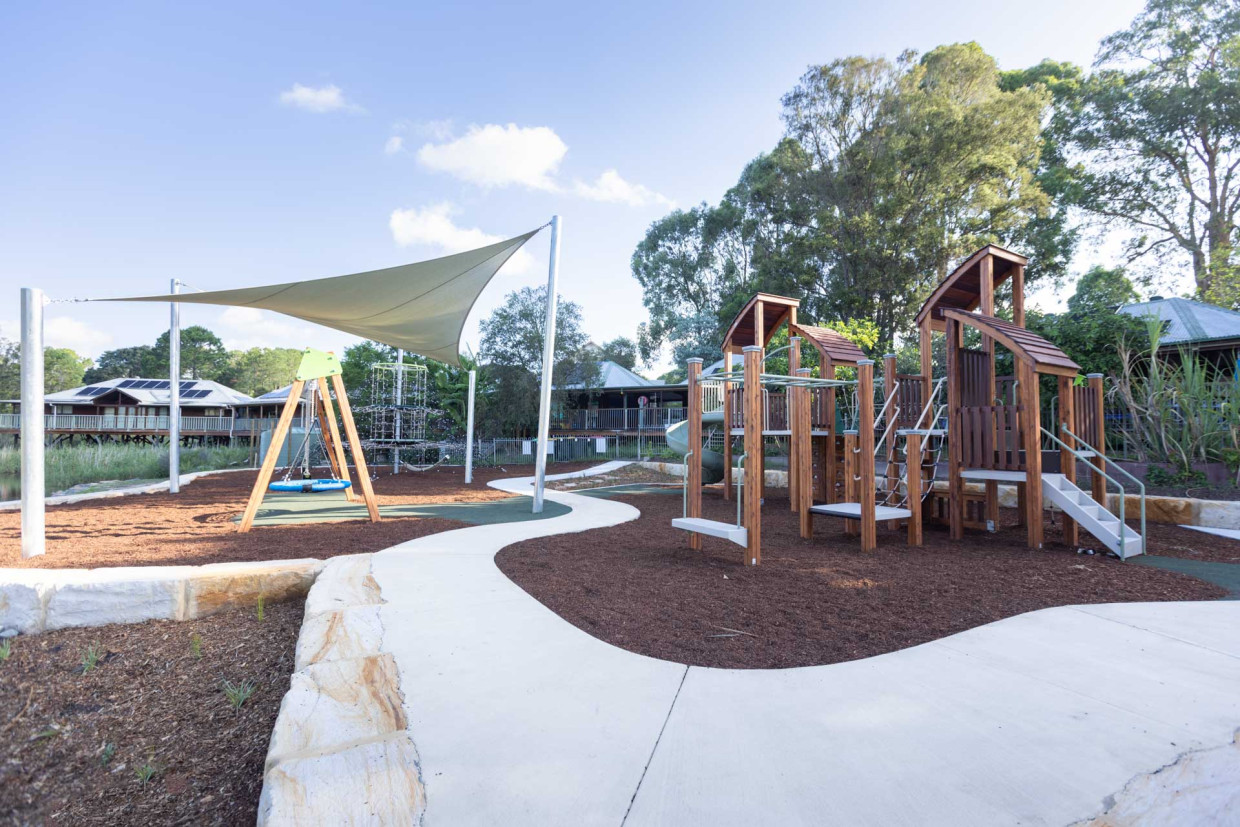
East Maitland, NSW
Uses a mix of play types to create a nature-aligned playspace.
New Farm, QLD
Shows how slopes, landscape treatment and teacher sightlines can be handled.
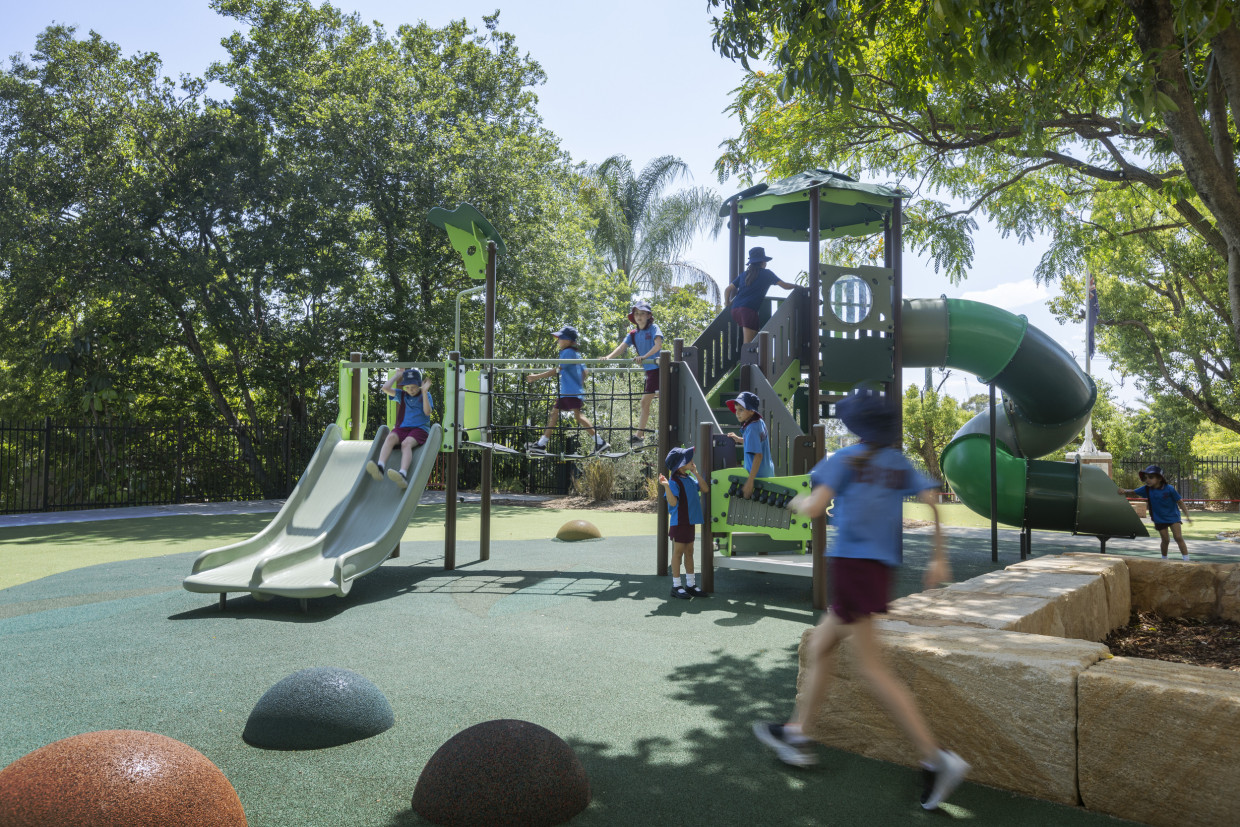
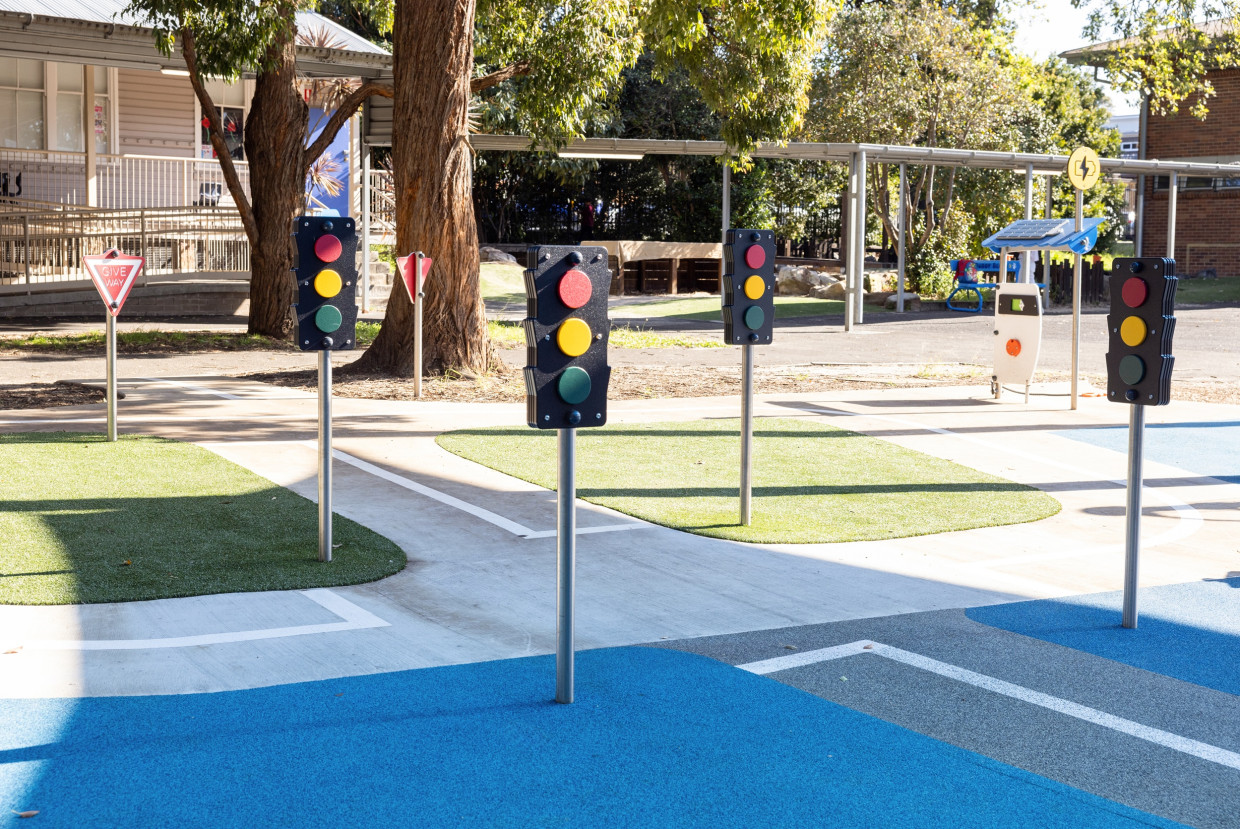
Arncliffe, NSW
Uses mixed surfacing and the natural fall of the site to control cost and add play value.
Birchgrove, NSW
A broader schoolyard concept with play, sensory spaces, sport and outdoor-learning areas.
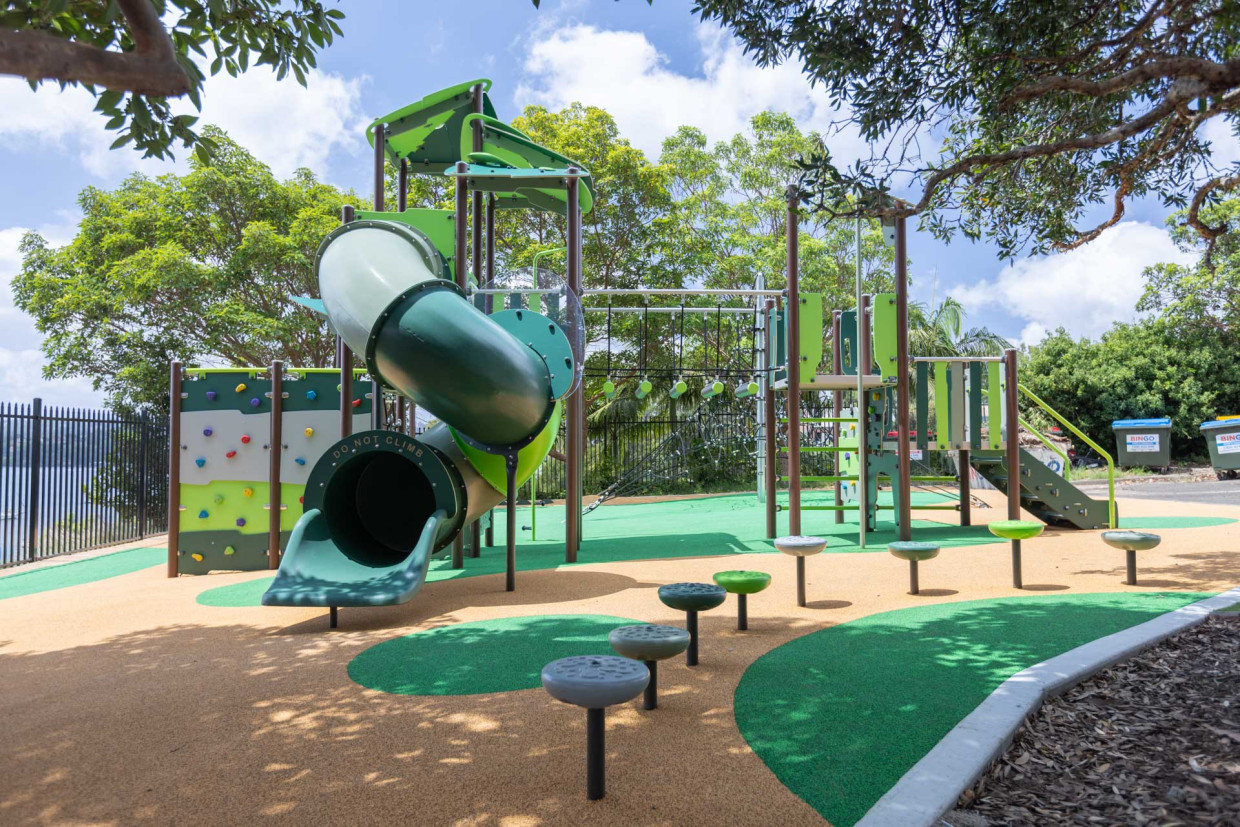
A compact installed package can sit around $50,000 to $60,000 plus GST on an ideal site. A lower figure may be possible for a small equipment-only purchase, but delivery, installation and compliant surfacing still need to be allowed for.
Surfacing and site work can absorb a large share of the total. A project using loose-fill materials may direct more money into equipment. A project using tiles or unitary surfaces may reduce the equipment allowance but improve circulation and the finished space.
No. School equipment must be commercial-grade and suitable for heavy, multi-user use. Residential products are not designed for school duty cycles or commercial playground requirements.
There is no universal number. Start with enrolment, the students using that zone, break-time patterns and what else is available in the yard. Ask the designer to state expected concurrent use and explain how students enter, move through and leave the equipment.
It can include wood chip, but loose-fill surfacing should not be the only route to every activity. Firm accessible paths and selected unitary-surface zones can make the overall space more usable.
Sometimes. Existing equipment and surfacing need to be assessed for condition, compliance, fall-zone compatibility, remaining life and whether parts are available. Reuse should be confirmed before it is relied on in the budget.
Yes, and many schools prefer that. The full program still needs enough time for site work, concrete curing, playground surfacing, inspection and weather delays. Book early if a fixed holiday window matters.
The full timeline depends on design approval, product selection, manufacturing, site preparation and installation. Standard products generally move faster than bespoke structures. Ask for a project program, not just a delivery estimate.
There is no fixed answer. Equipment drives play value and capacity. Playground surfacing drives safety, access, maintenance and the finished experience. The right split depends on the school brief and site.
Send the school address, site photos, dimensions, preferred installation timing, age groups, target capacity, must-have activities and whether the budget must cover equipment only or the complete project.
A useful school playground budget starts with the problem you are trying to solve. Are younger students short on activities? Are Years 3 to 6 bored? Is the current area inaccessible? Is supervision difficult? Is the equipment worn out?
Once the need is clear, you can split the budget between equipment, installation, surfacing and schoolyard work without guessing.
Send Moduplay your site, target budget, year levels, capacity and must-haves. The team can tell you what is realistic, what is likely to move the cost and where the school can save without weakening the result.
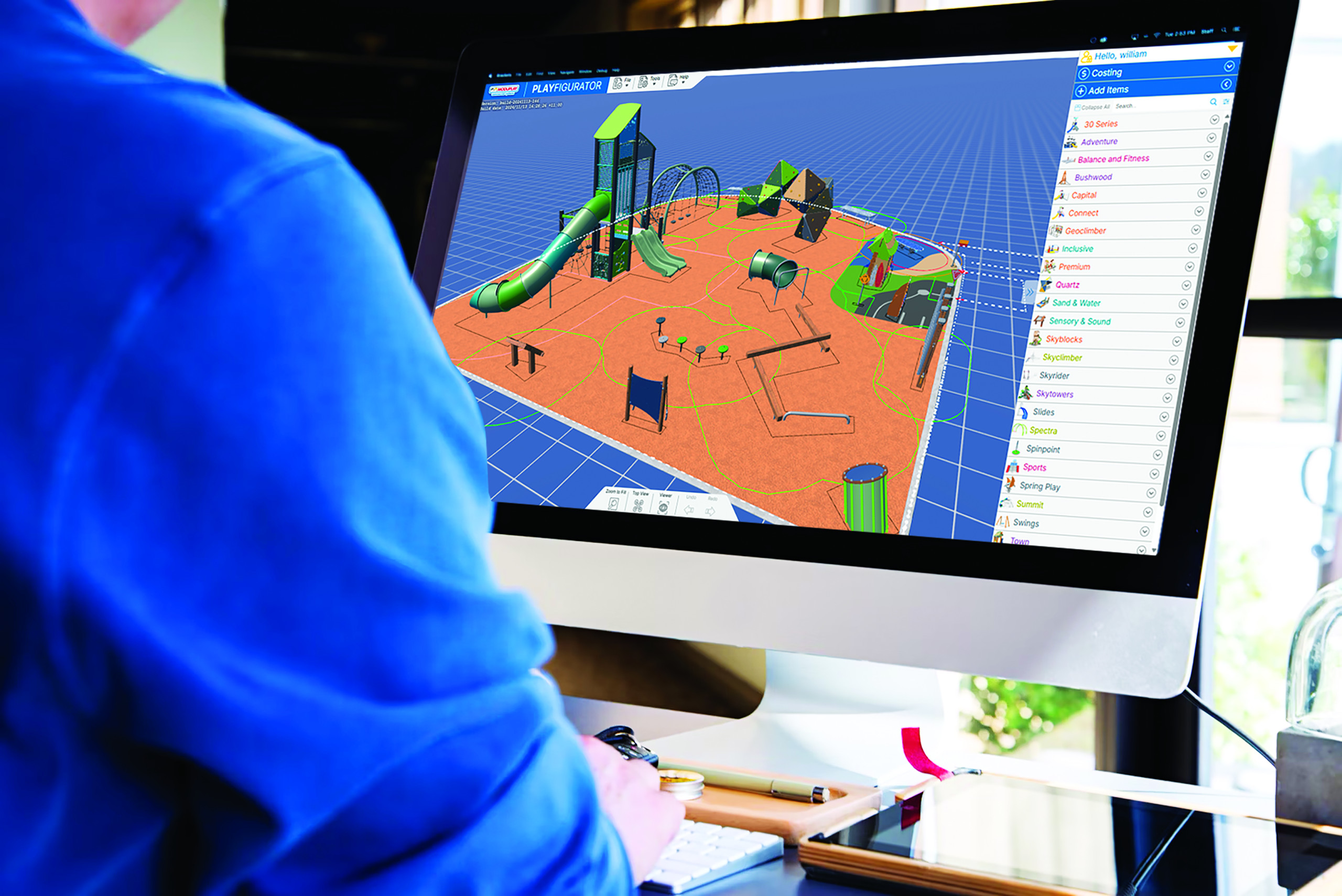
ONLINE PLAYGROUND PLANNING

Bring students and stakeholders into the early planning conversation. PlayFigurator lets your school test site ideas, explore real Moduplay equipment, compare surfacing directions and shape a clearer playspace brief before detailed design begins.
Get design inspiration, business tips and new product alerts straight to your inbox with our Moduplay Newsletter, the Playground Press once a month.
Just Launched

The world of Moduplay has just been unlocked. One login across the Moduplay Group, helping you find what you need faster than ever.
 One login across our websites
Pricing on the Moduplay and Kaebel Leisure websites
Resource downloads
Build your own designs on Playfigurator
More coming soon!
Approval criteria applies. UrbanFiT & Playground Parts SSO experience launching soon.
Before You Continue
Register for a Moduplay account to see pricing on 500+ Australian Made products, and build your quote in seconds.
Pricing on 500+ Australian Made products
One login for the Moduplay Group websites
Build your own designs on Playfigurator

Enter your email to sign in or create an account.