 We've updated how you login to our website -
Rainbow Street Primary School
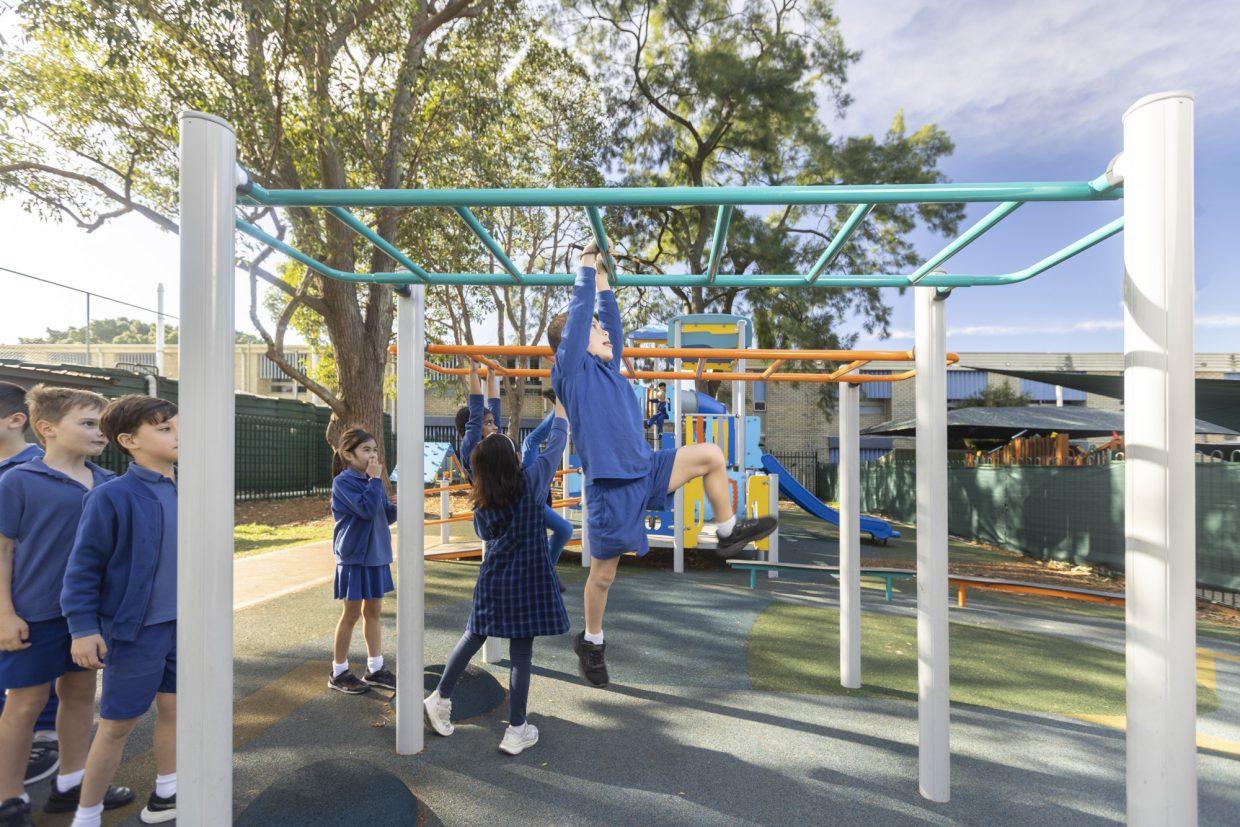
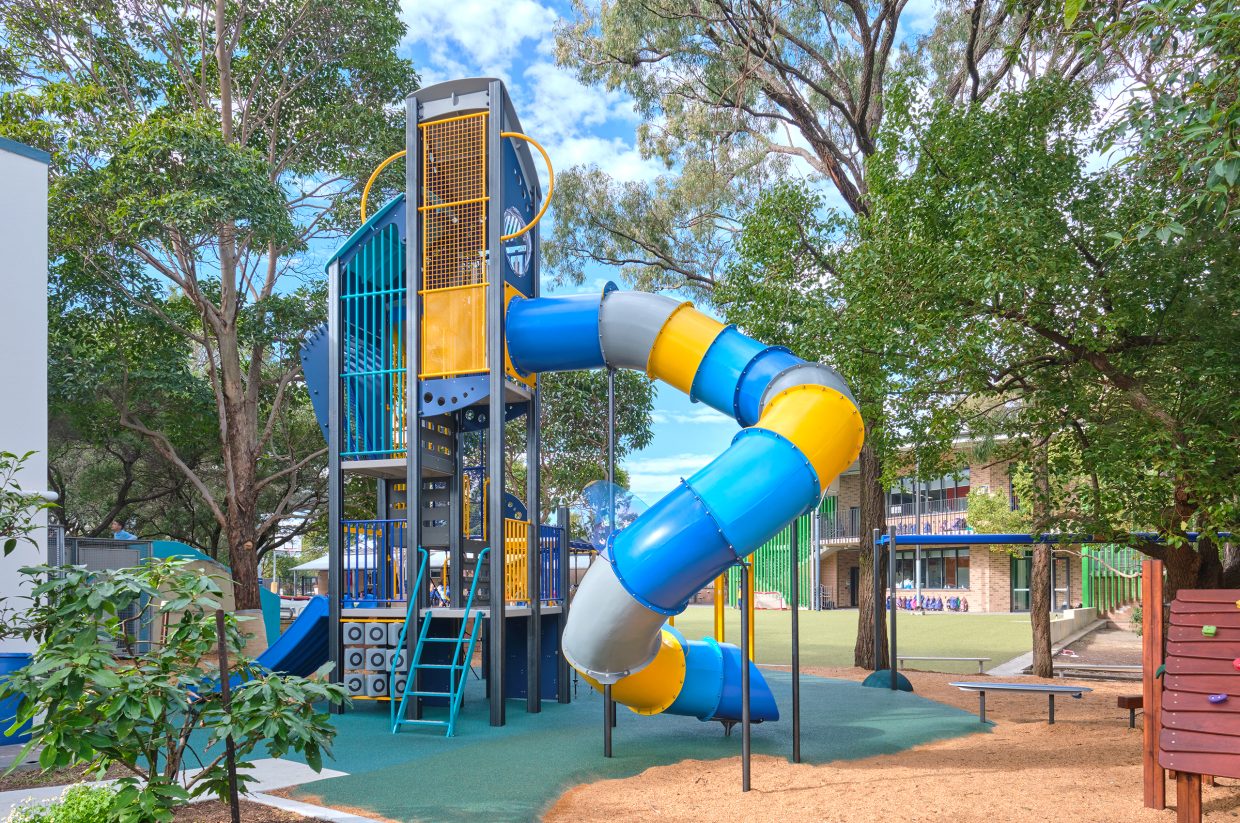
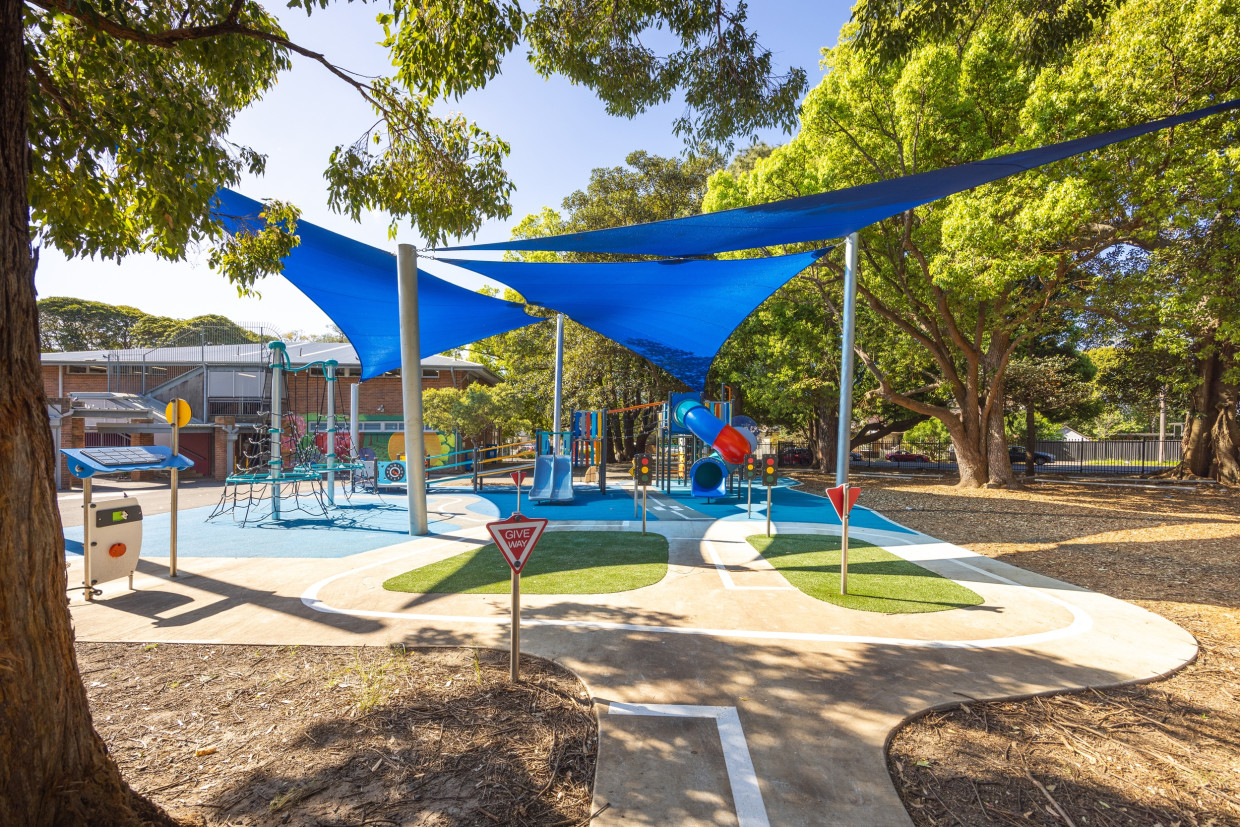
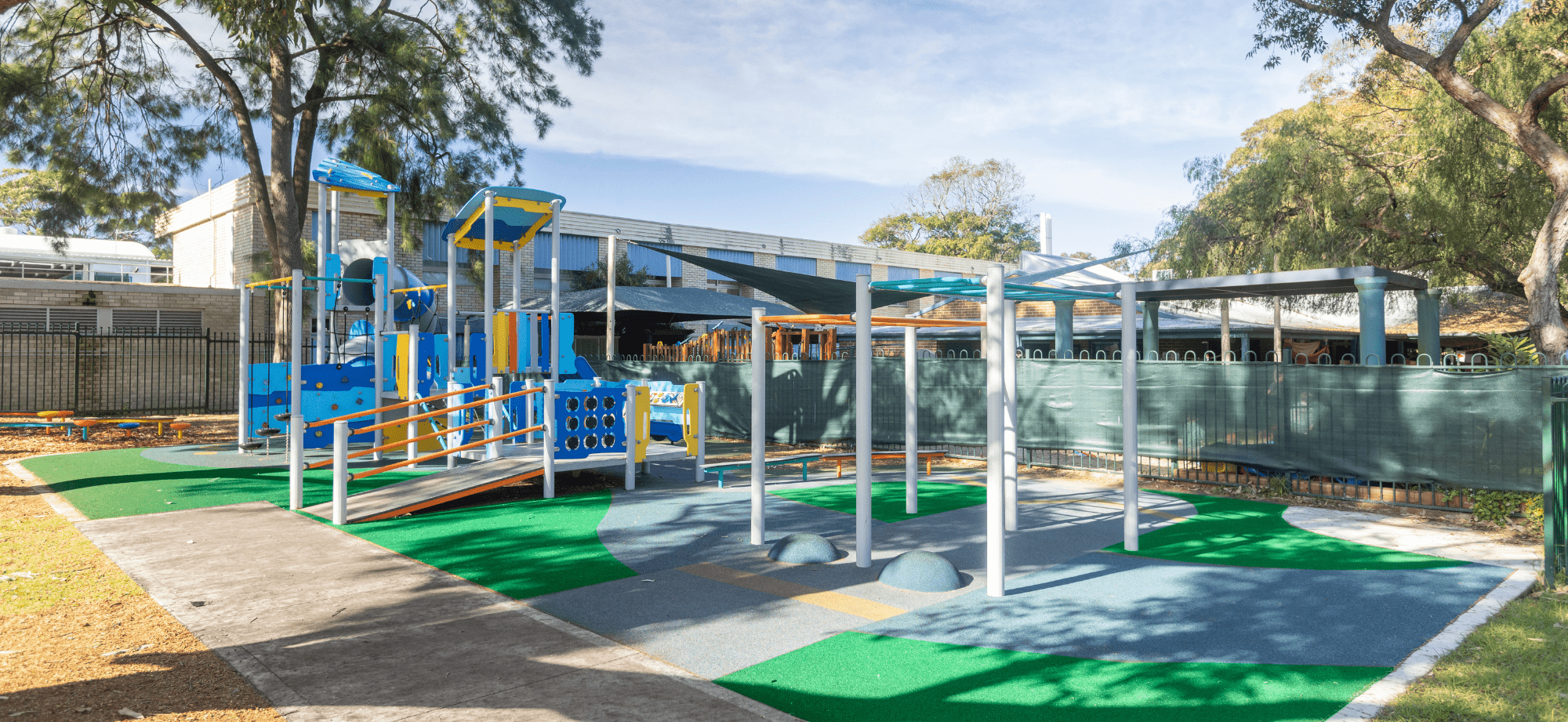
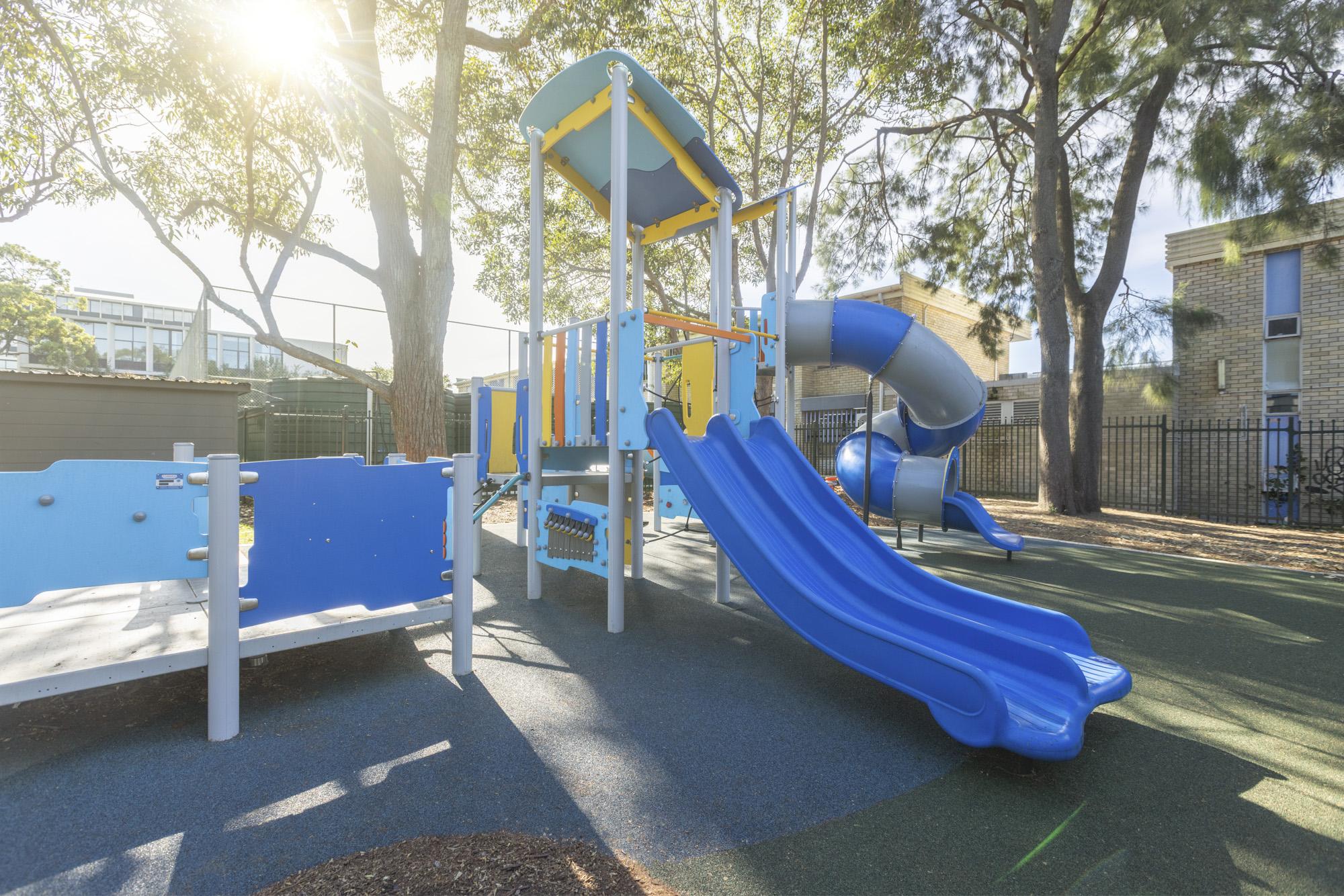
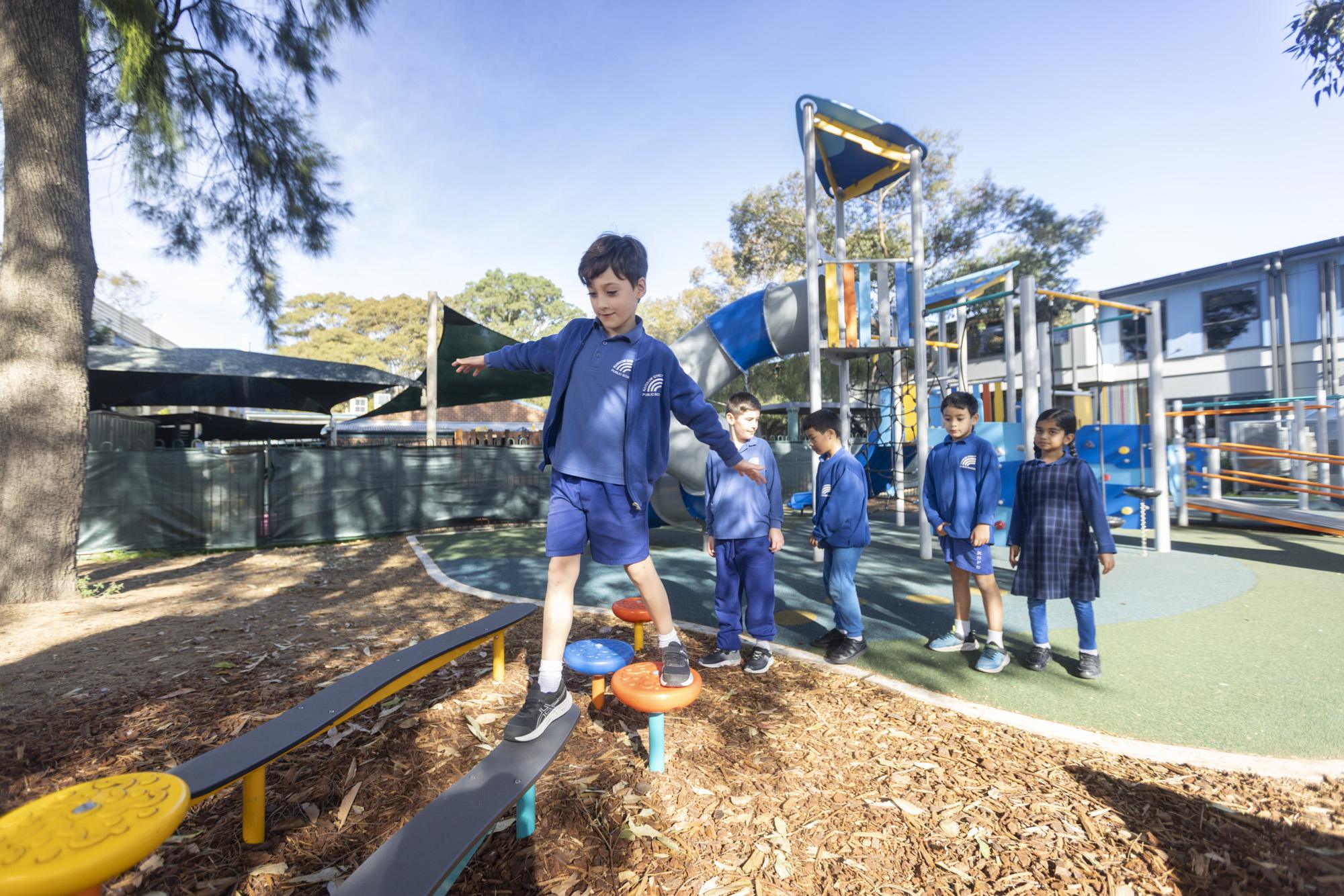
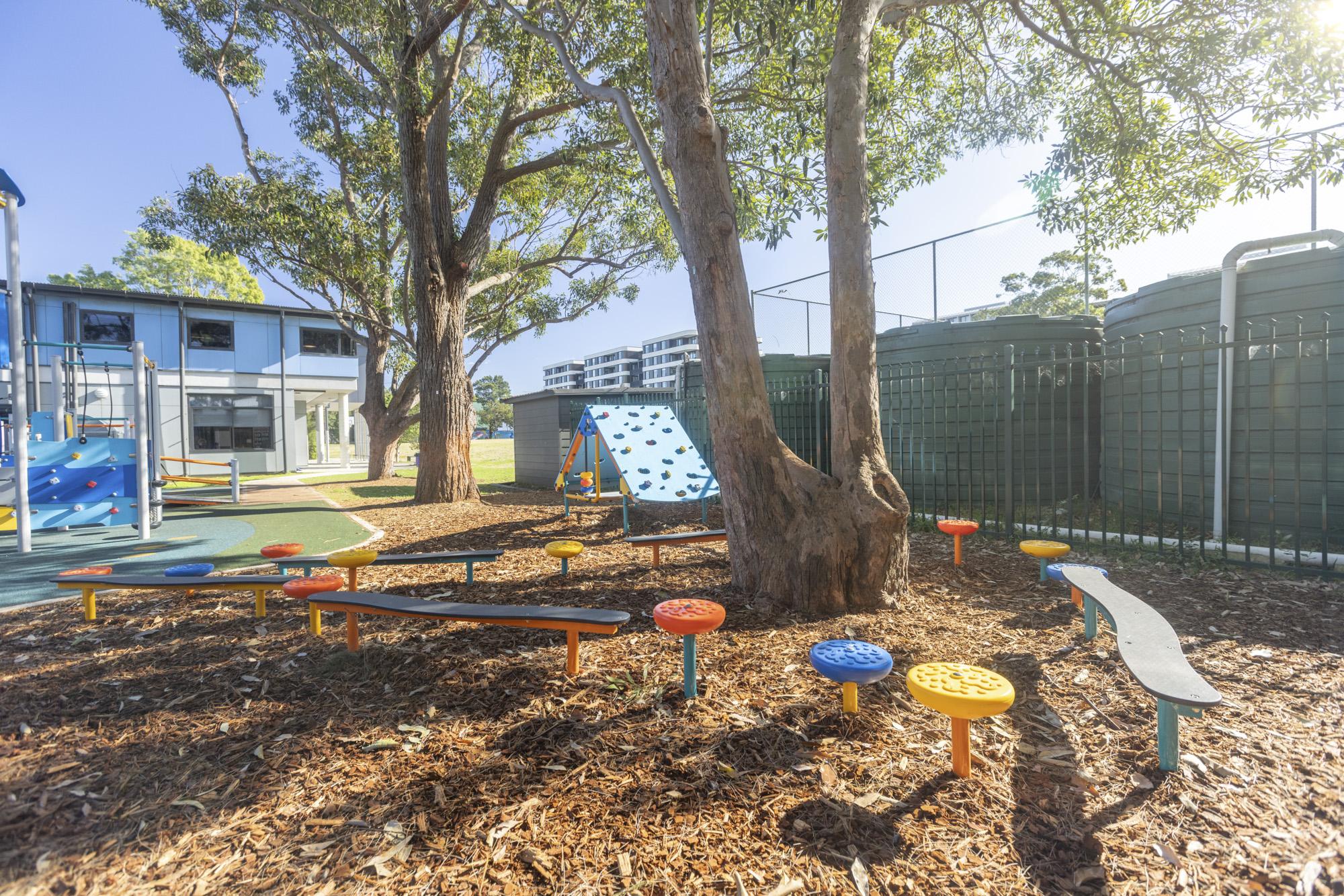
Delivered end-to-end by Moduplay, the new playspace at Rainbow Street Primary School turns a previously underutilised corner of the grounds into a fresh, purpose-built play zone. Notes of blue echo the school uniform, giving the space its own unmistakable identity. Already well-used and well-loved, it’s the perfect finishing touch to the school’s play offering.
Project Overview
- Project Type
- Schools, Childcare & Education
- Budget (Equipment Only)
- $70,000 – $80,000
- Date Built
- 2026
Reimagining an Underutilised Space
Every school has corners that don’t quite pull their weight, patches of yard that see foot traffic but little purpose. Rainbow Street Primary School had one of these: a space with real potential, sitting idle. Rather than reworking existing play areas or open run-around space, Rainbow Street saw the opportunity to activate this underused pocket of the grounds.
Rainbow Street already had playspaces and plenty of room for kids to run, this project wasn’t about replacing or competing with what already existed; it was the cherry on top of an already considered selection of play choices. A dedicated, considered space layered onto an already strong play offering, giving students another reason to explore, challenge themselves, and play differently across their school day.
A Project Built on Communication
Concept design for Rainbow Street began in June 2023. The playground was completed and installed in early 2026. That gap, the better part of three years, was not a delay. It’s a reflection of how school playground projects actually work.
Between funding cycles, procurement processes, budget approvals and internal sign-off, schools navigate a genuinely long road from first conversation to finished install. It’s a process with many stages, many stakeholders, and long stretches where progress happens behind the scenes rather than on the ground. Projects like Rainbow Street underline why consistent client communication matters so much throughout that journey, and why working with a partner who understands the shape and pace of school procurement and stays engaged through every stage of it, makes all the difference to the outcome at the other end.
Softfall as Guidance
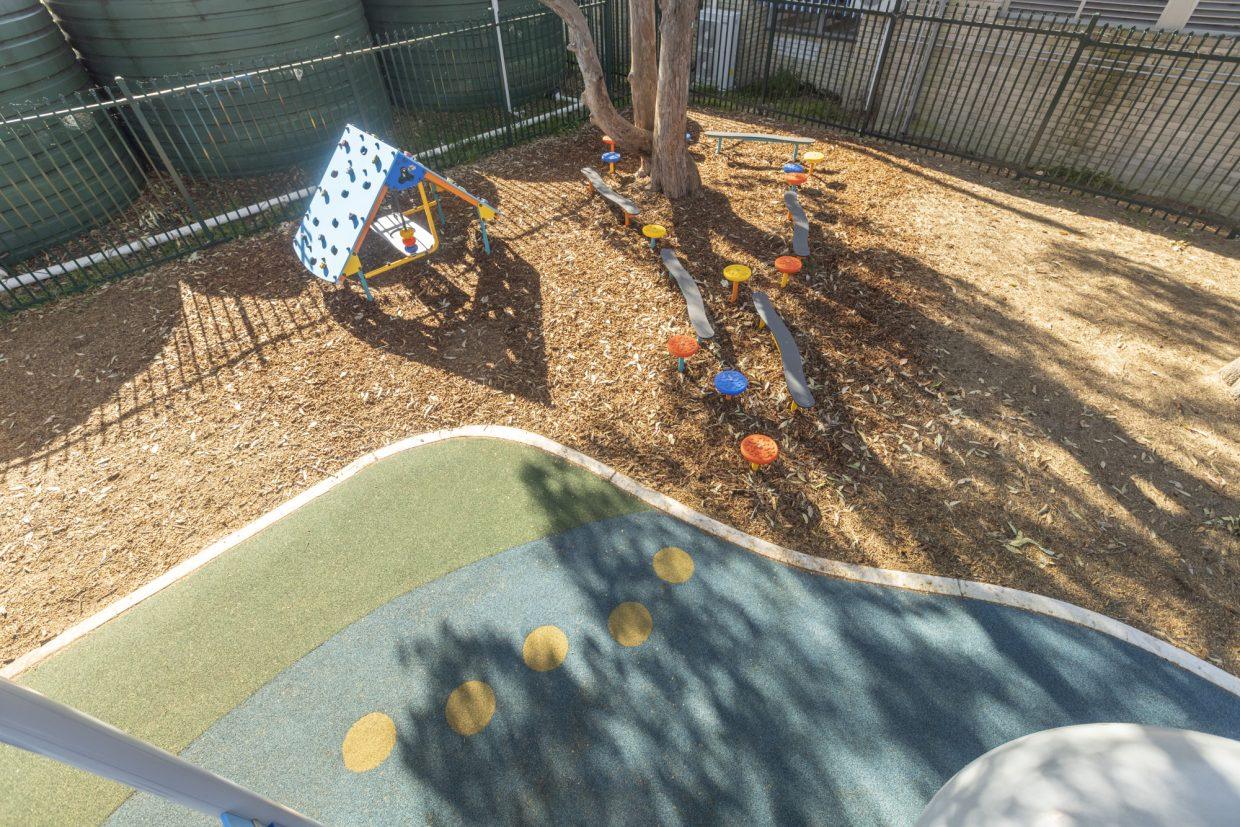
Softfall surfacing is often thought of purely as a safety measure, but in a school playground it does more than cushion a fall.
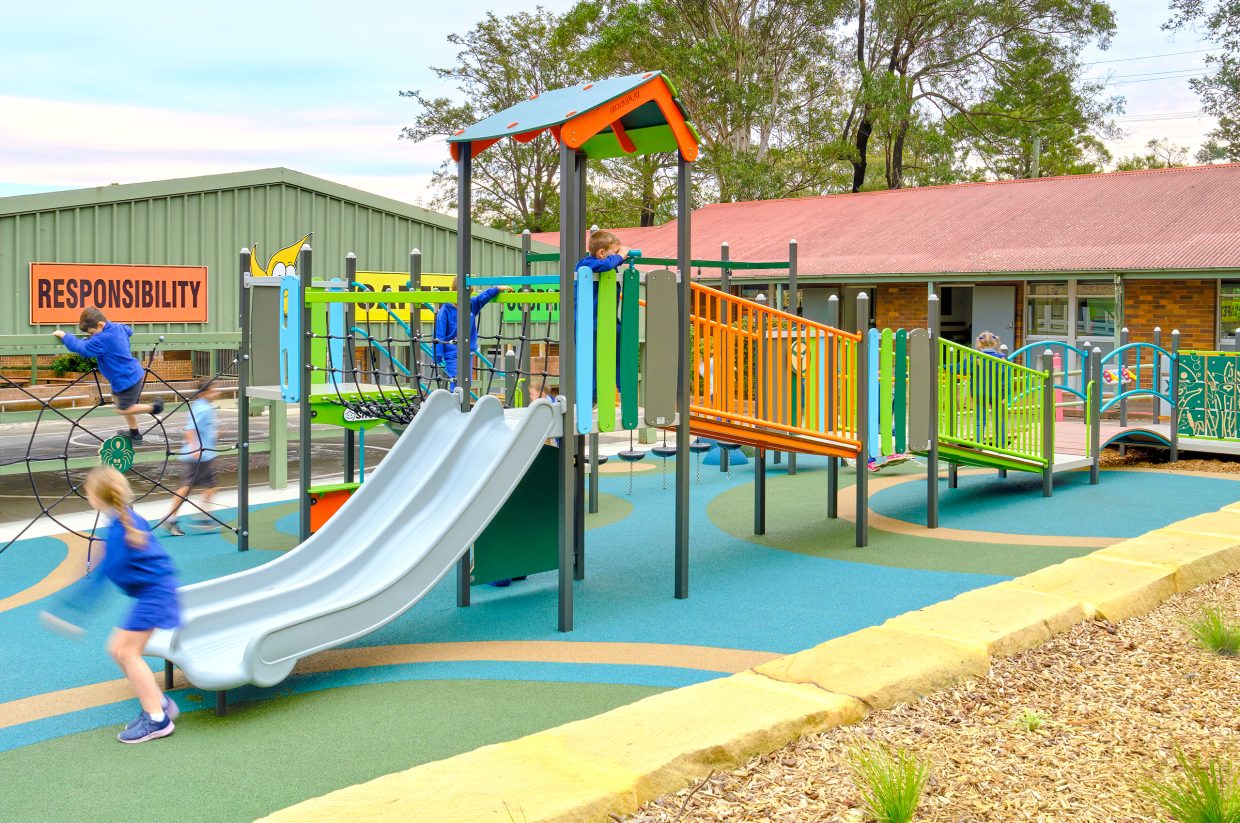
Thoughtful softfall design helps guide how children move through a space, aiding in subtly signalling pathways, zones, and transitions between different play activities. At Rainbow Street, softfall design was treated as an active part of the layout, not an afterthought, helping students navigate intuitively between the junior section, the pod trail, and the more advanced climbing and sliding zones.
Designed for Every Stage of Development
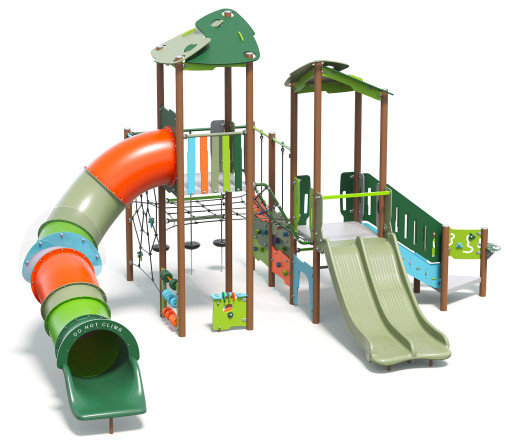
The playspace is built around a clear progression of challenge. A junior section anchors one end of the space, with ramped access and play panels giving younger or less mobile students an entry point that’s genuinely inclusive from the first step in.
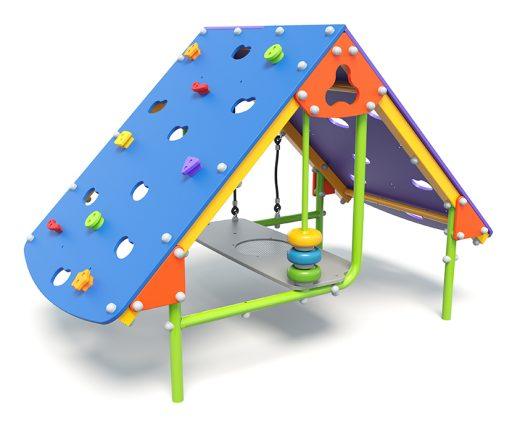
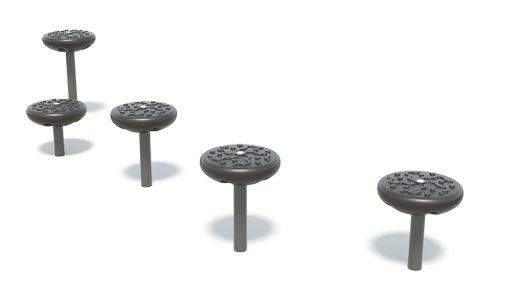
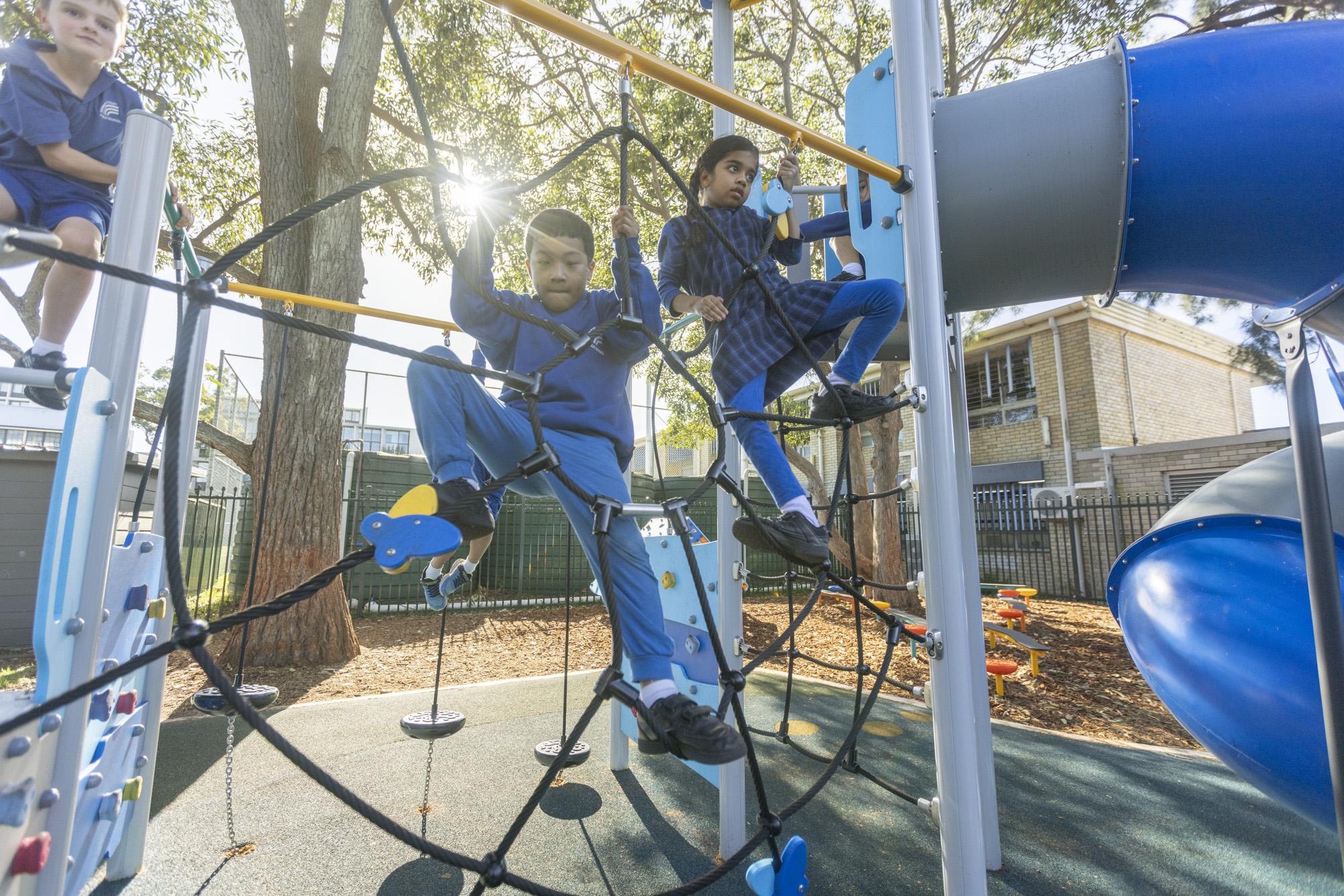
From there, the space opens into a broader range of physical challenge: climbing elements, sliding, and the kind of varied, high-energy play older or more confident students seek out. A pod trail adds a balance challenge, paired with a smaller-scale climbing feature that bridges the gap between the junior zone and the space’s more demanding equipment. Together, the layout makes sure students can enter at a level that suits them and progress as their confidence and physical skills develop.
The Power of Layered Play
Good playground design doesn’t only provide equipment; it provides a learning environment. Wayfinding and layered play are central to that idea, particularly in a school setting where observational learning happens constantly. Children watch each other and they copy what works. That “monkey see, monkey do” instinct is one of the most powerful tools kids have for building new physical skills.
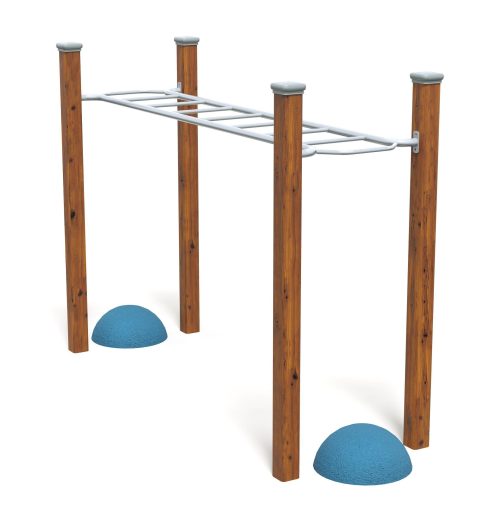
Monkey bars are a clear example. It’s a genuinely tricky skill to learn, with grip strength, momentum, coordination. Watching peers work through it is often what helps a learning child crack it themselves. That’s why Rainbow Street features two sets of monkey bars, set at different heights. Younger or newer students can build the skill at a shorter, more manageable height, while older or more capable students take on the taller set, all within sight of each other, all learning as they go, and all part of the same shared activity.