4 Levels of Playground Customisation | Moduplay
At Moduplay, we understand that every playspace has its own unique character, challenges, and aspirations. That’s why we’ve developed three...
Good playground design starts by understanding the people who will use the space, what they need from it and what the site can realistically support. For someone learning how to design a playground, equipment selection is only one part of the process.
Age groups, accessibility, site conditions, safety requirements, play types and long-term maintenance all influence the final layout. A community park may need several activity zones and supporting amenities. A school may need strong play value within a smaller footprint. A childcare centre will have different requirements again.
This guide covers the main decisions behind effective playground designs and gives beginners a practical framework for moving from an initial idea to a workable concept.
Start by deciding what the playground needs to achieve.
Some spaces focus heavily on active movement through climbing, balancing and physical challenge. Others need stronger opportunities for sensory play, social interaction or imaginative activities. Larger playground designs can support several play types across separate areas.
Defining the purpose early gives the design team a clearer basis for choosing equipment and organising the site.
If the playground forms part of a larger project, a playground project planning guide can help establish the brief, budget, site requirements and project responsibilities before detailed design begins.
The shape and condition of the site can significantly affect playground design.
Review the available footprint, existing levels, drainage, trees, services and surrounding structures. Consider where people enter the space and how they move between the playground and nearby facilities.
Site features can also create useful design opportunities. A slope may support an embankment slide. Existing trees may provide natural shade. A narrow site may suit vertical climbing activities that create stronger play value without taking up as much ground space.
Think carefully about the children who will use the playground most often.
Younger children generally need lower equipment, simpler access and activities that support early movement, sensory exploration and imaginative play. Older children can take on greater height, physical challenge and more complex climbing or movement activities.
A site that serves several ages may benefit from distinct activity areas. This approach can help younger children use equipment suited to their stage of development while giving older children enough challenge to remain engaged.
User numbers matter too. A public playground that receives heavy weekend use requires different capacity from a small playground at an early learning centre.
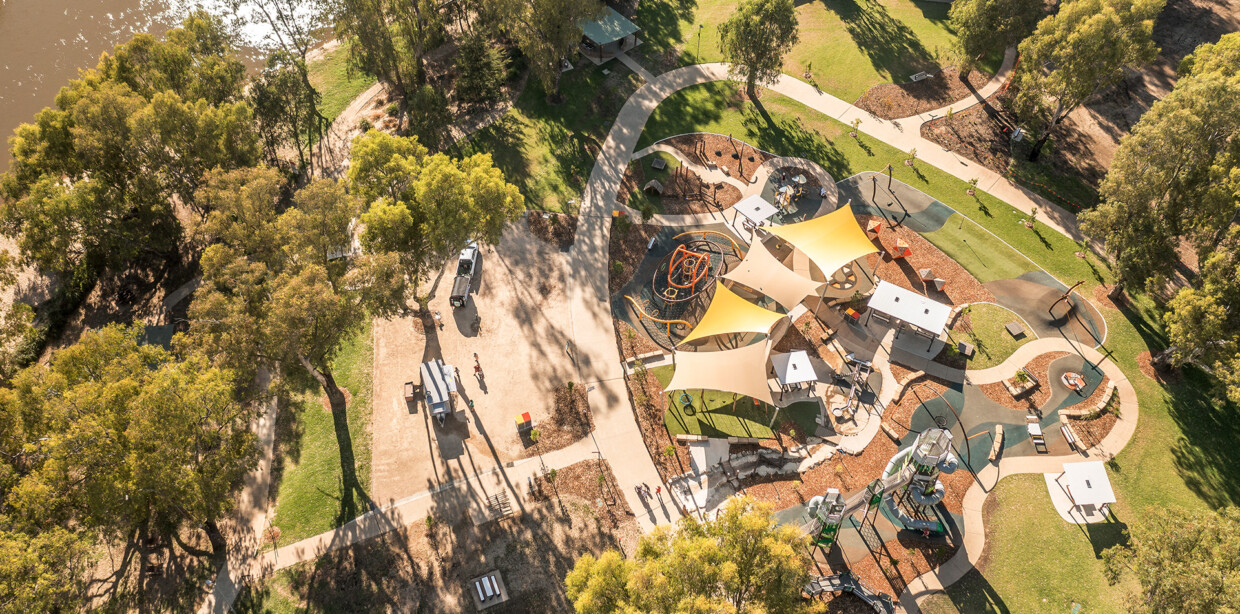
Inclusive playground design should create meaningful ways for children of different abilities to participate together.
Physical access forms one part of that goal. Designers should also consider the activities children can reach once they enter the playground.
Ground-level play, sensory activities, supportive seating, accessible circulation and different challenge levels can provide a broader range of participation options. Moduplay’s guide to designing inclusive play areas covers these considerations in greater detail.
Avoid concentrating all accessible features in one separate part of the playground. Look for opportunities to distribute inclusive activities throughout the site so children can take part in shared play.
Children benefit from opportunities to test their strength, balance, coordination and judgement.
A good design can provide several levels of challenge rather than requiring all users to approach equipment in the same way. One climbing route may provide an easier path while another asks for greater reach, balance or upper-body strength.
This gives children opportunities to choose challenges that suit their confidence and abilities.
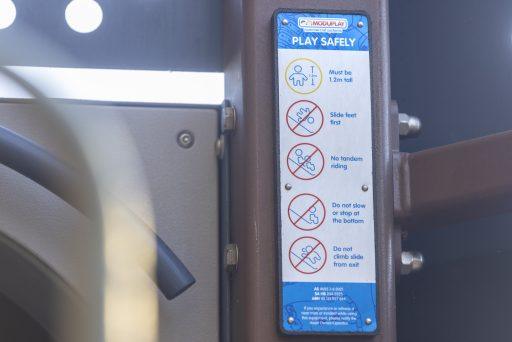
Safety requirements affect layout, equipment spacing, fall zones, surfacing and equipment selection.
Designers should account for the relevant Australian standards for playgrounds before the project reaches detailed design. Early consideration can prevent avoidable changes later.
Safety does not require removing challenge from play. The aim is to control hazards that children cannot reasonably recognise while still giving them appropriate opportunities to develop confidence and physical skills.
Material selection affects durability, maintenance, appearance and how the playground responds to its environment.
Consider UV exposure, rainfall, heat, frost and local site conditions. Coastal locations may require additional protection against salt air and corrosion.
Materials should also suit the design direction. Timber can support a natural setting. Steel, aluminium and HDPE can suit contemporary playground designs and high-use environments.
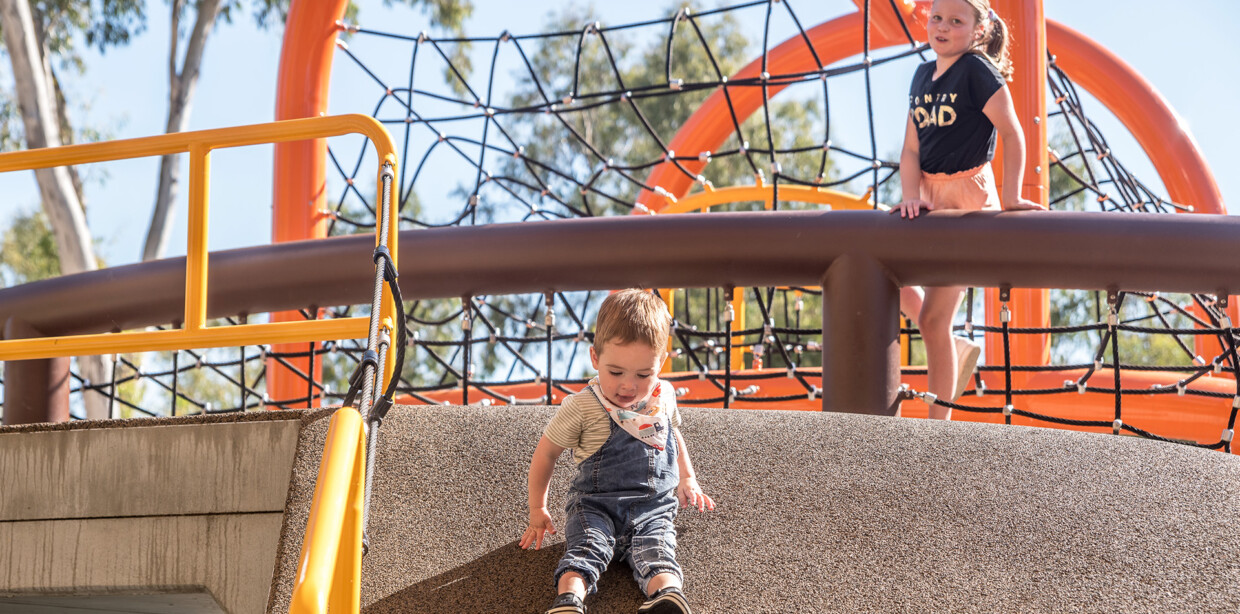
A playground budget needs to cover more than equipment.
Site preparation, freight, surfacing, landscaping and other project requirements can affect the final cost. Establishing a clear budget before detailed design helps prevent the concept from moving beyond the available funds.
When budgets are limited, prioritise the activities that contribute most strongly to the project objectives. A phased approach may also allow the organisation to establish a core play area first and expand it later.
Consider ongoing care while selecting materials and equipment.
Public playgrounds, schools and community facilities can receive significant daily use. Equipment should support practical inspection, cleaning, repairs and replacement of components when necessary.
The surrounding site needs attention too. Drainage, vegetation, pathways and surfacing all affect how easily the playground can remain safe and functional.
Community consultation can improve a playground design when the questions focus on practical decisions.
Ask users which age groups the existing space serves poorly. Find out which activities they value and what access barriers affect current use. Schools can gather input from students and teachers. Councils may consult local families, accessibility groups and community organisations.
The design team can then assess that feedback alongside budget, safety and site requirements.
Material selection, product lifespan and site treatment can influence a playground project’s environmental impact.
Look for durable materials that suit the intended lifespan of the space. Projects can also retain useful natural features where appropriate, incorporate planting and consider recycled or responsibly sourced materials.
Good environmental planning should relate to practical project decisions rather than broad sustainability claims.
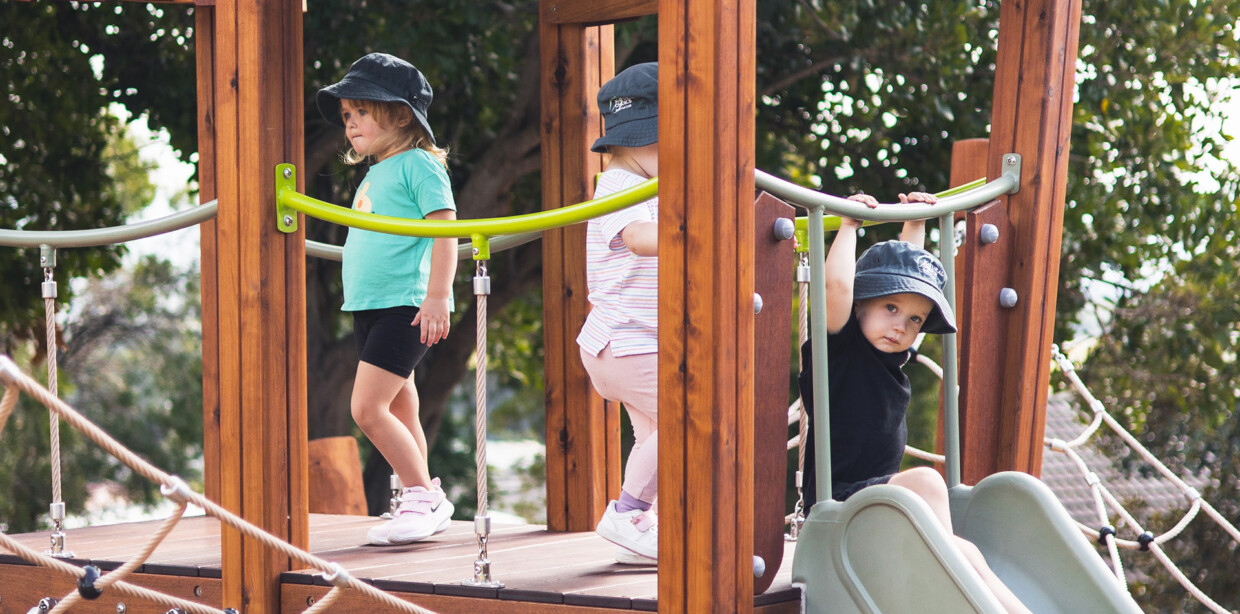
There is no single layout that suits every site. Different playground designs respond to different users, settings and project objectives.
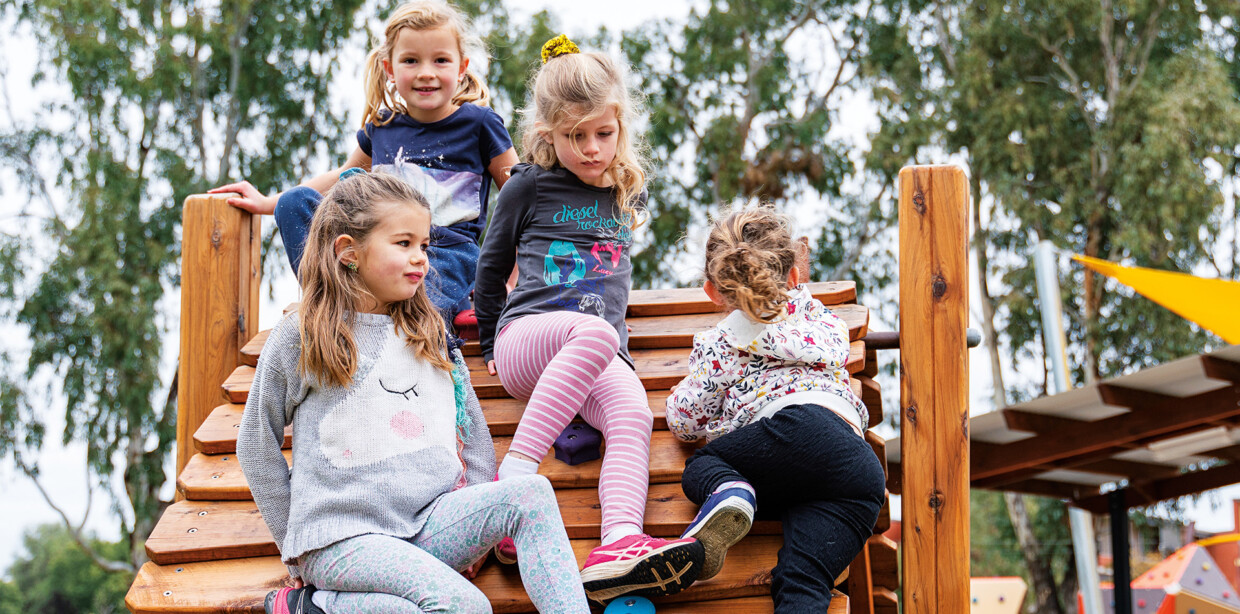
Nature play designs use timber, planting, rocks, sand, water and organic forms to strengthen children’s interaction with the outdoor environment. They often suit parks, childcare facilities and landscape-led projects.
Themed playground designs use a recognisable concept to shape equipment, colours and activities. A design may draw from local history, wildlife, transport or the surrounding landscape.
Multi-age playground designs create separate or connected areas for different age groups. Designers can vary equipment scale, challenge and activity types across the site while maintaining clear movement between zones.
Adventure-focused designs place greater emphasis on climbing, balancing, ropes, obstacles and physical challenge. These spaces can work particularly well for older primary-age children who may need stronger physical engagement.
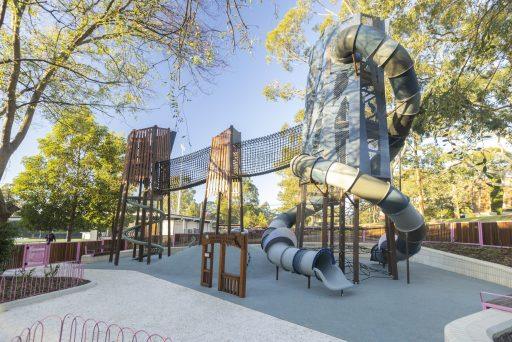
Compact playground designs concentrate several activities into a smaller footprint. Schools, childcare centres and urban sites often use vertical play, integrated structures and freestanding activities to make better use of limited land.
The best approach comes from the project brief and site rather than choosing a style first and forcing it onto the space.
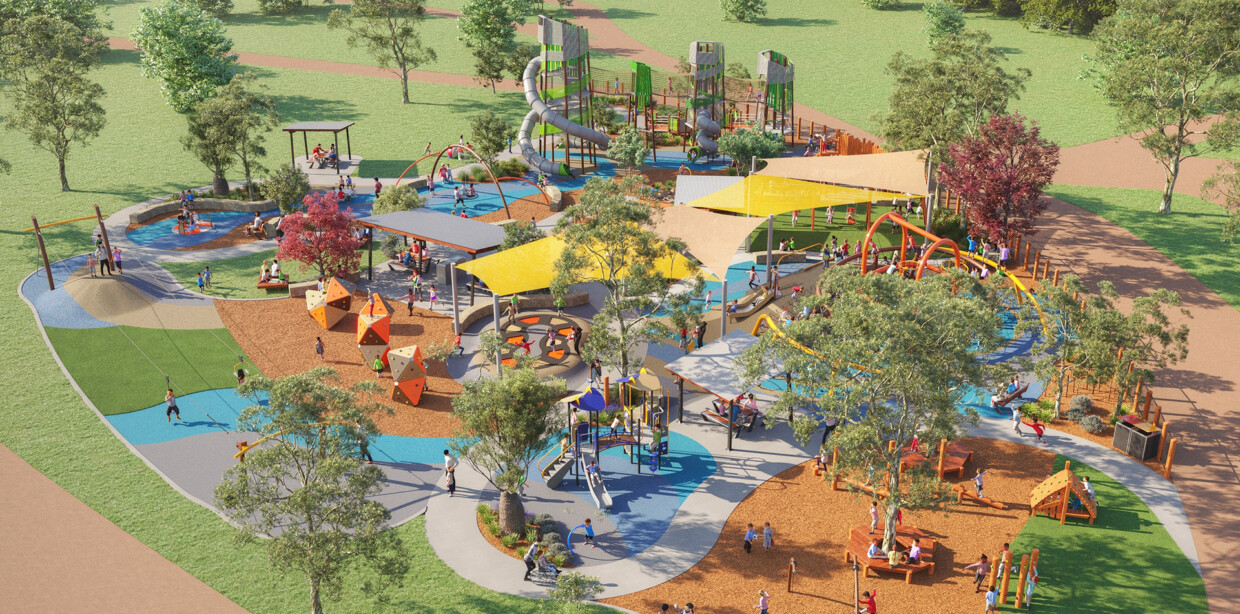
Designing a park requires a broader view than selecting play equipment.
Consider how people reach the play area and move around it. Pathways should connect entrances, equipment, seating and other facilities in a logical way. Shade can come from trees, shelters or a combination of both depending on the site.
Seating also affects how families use the space. Parents and carers need places where they can supervise children comfortably. Larger public parks may benefit from picnic areas, shelters, drinking fountains, bicycle parking and nearby amenities.
Landscaping can help define activity areas and improve the overall setting. Planting can provide shade, create separation between uses and connect the playground to the character of the park.
When designing a park, look at the relationship between these elements rather than treating the playground as an isolated collection of equipment.
Playground designers, landscape architects, engineers and safety specialists can each contribute technical knowledge at different stages of a project.
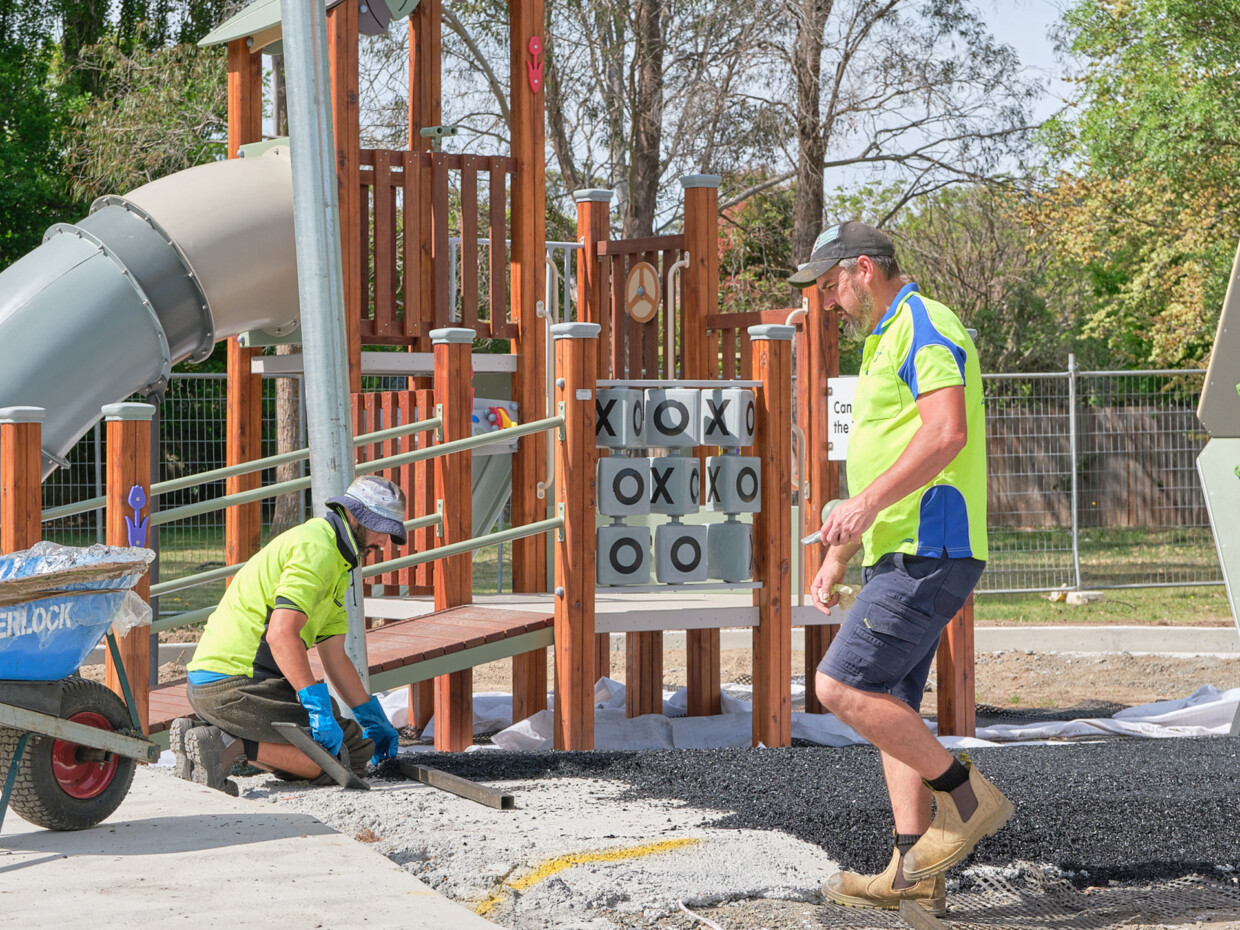
The project team should confirm equipment layouts, dimensions, clearances, surfacing and relevant safety requirements before manufacturing or construction progresses.
Clear responsibilities also reduce the risk of site contractors, designers and equipment suppliers working from different information.
Detailed plans help stakeholders understand how the playground will work before the project moves forward.
A concept plan can show equipment positions, circulation and activity zones. Three-dimensional visualisations can help clients understand height, scale, colours and the relationship between different elements.
These tools make feedback more specific. A stakeholder can comment on an actual layout rather than trying to interpret a list of proposed products.
Beginners will often encounter these terms during the design process.
Multi-play structure
A connected play system that combines several activities such as climbing, slides, platforms and interactive elements.
Nature play
A design approach that uses natural materials, forms or landscape elements to encourage exploration and interaction with the outdoor setting.
Play zone
A defined part of the playground organised around a particular age group, activity or type of play.
Inclusive play
Play activities and environments that give children with different abilities meaningful opportunities to participate alongside others.
Circulation
The routes people use to move into, through and around the playground.
Completed Moduplay projects show how different sites can lead to very different playground designs.
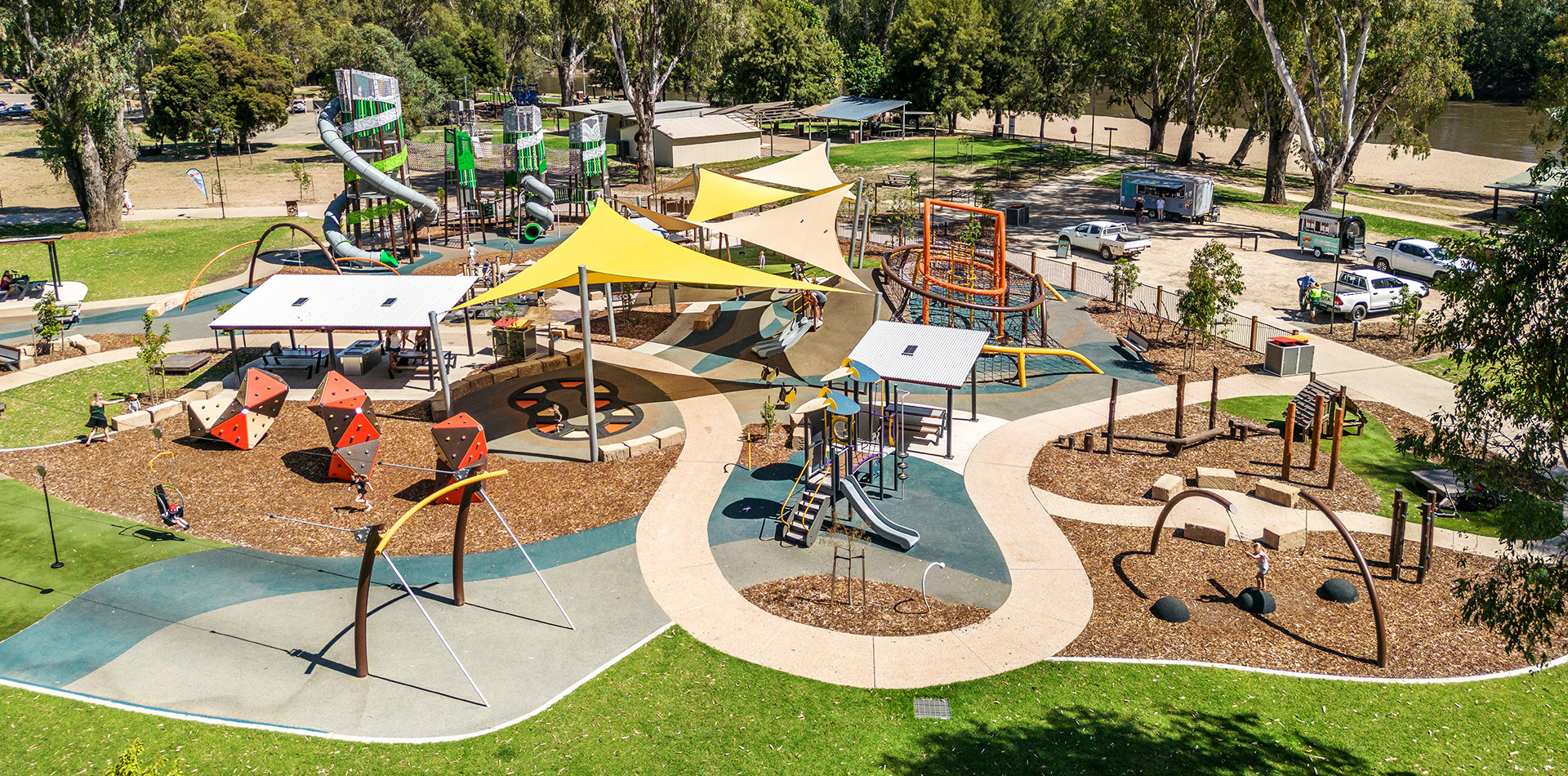
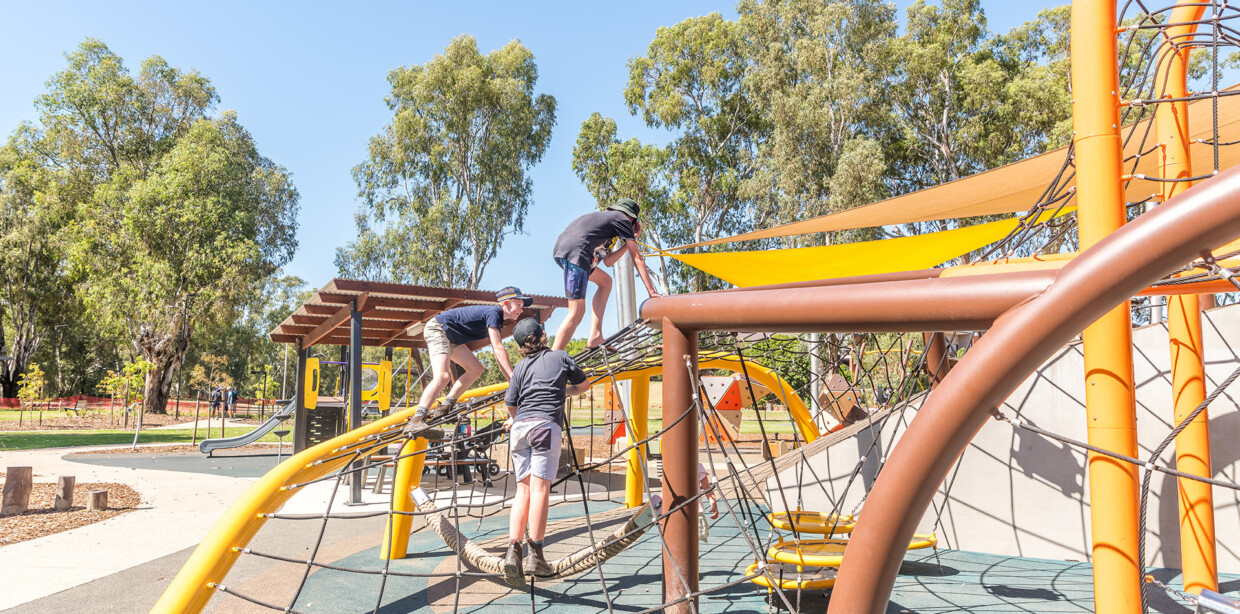
This large public playground uses a strong local theme alongside high towers, climbing activities, an accessible carousel, a flying fox and supporting landscape elements. Paths, shelters, seating and shaded areas help the playground function as a larger community recreation space.
The Protea Reserve playground uses a nature-focused design that responds to the site’s established trees and surrounding landscape. Its play equipment draws from the character of the reserve rather than competing visually with the setting.
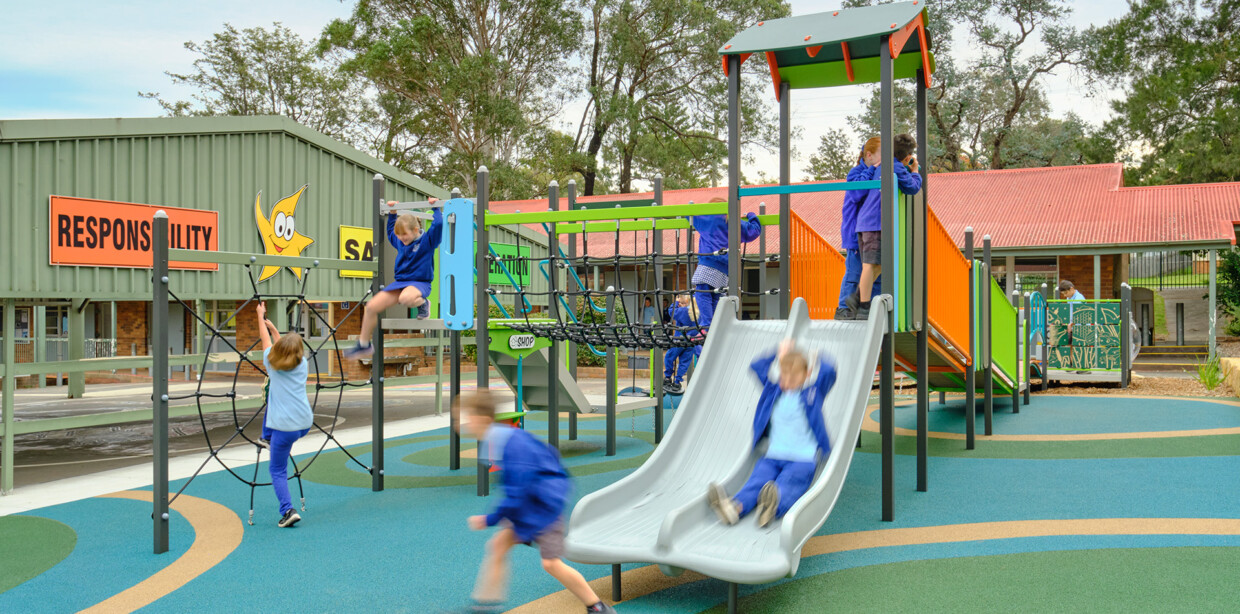
The Ashbury Public School project demonstrates how playground designs can make stronger use of restricted school grounds. Vertical equipment creates physical challenge while leaving room for additional activities such as climbing and timber balance play.
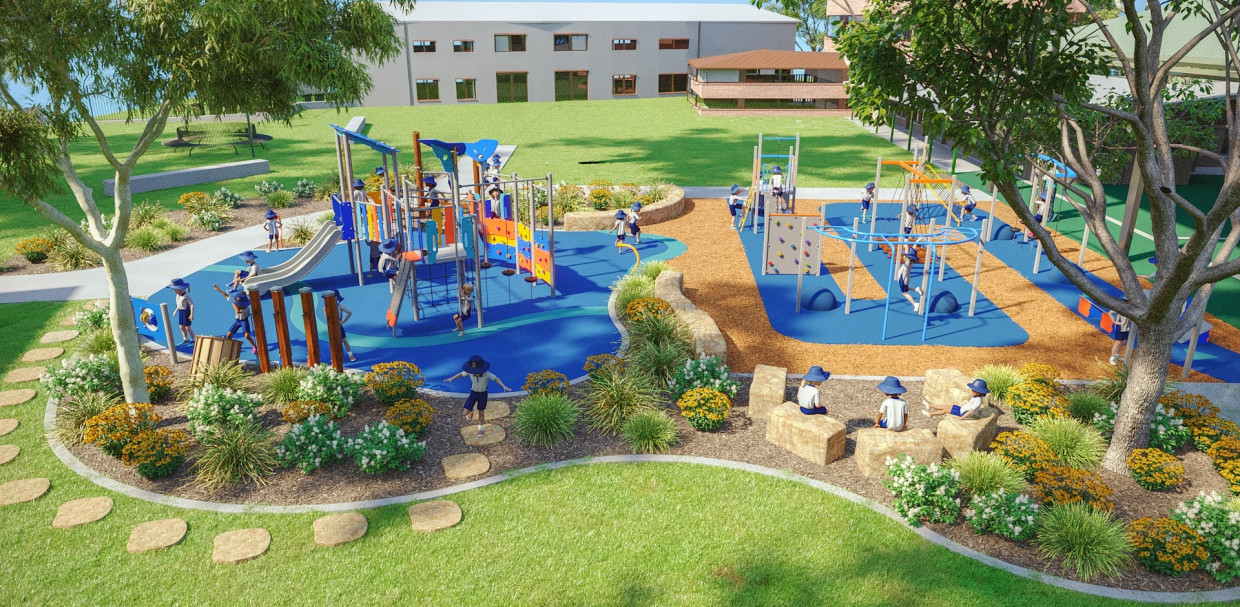
Cooper Street Reserve uses accessible equipment, themed activities, trampolines and a large central tower to serve children across different ages and abilities. The surrounding landscape contributes to a public space that supports play and community use beyond the equipment itself.

These examples show how playground designs can respond to very different briefs. Site size, users, local character and project objectives should shape the concept before individual products take priority.
Learning how to design a playground starts with a clear purpose and a realistic understanding of the site. Age groups, accessibility, challenge, safety, materials and long-term maintenance should then guide the decisions that follow.
The strongest playground design connects these factors into one coherent space. For larger park projects, the same thinking should extend to pathways, seating, shade and landscaping so the play area works effectively as part of the wider public space.
Get design inspiration, business tips and new product alerts straight to your inbox with our Moduplay Newsletter, the Playground Press once a month.
Just Launched

The world of Moduplay has just been unlocked. One login across the Moduplay Group, helping you find what you need faster than ever.
 One login across our websites
Pricing on the Moduplay and Kaebel Leisure websites
Resource downloads
Build your own designs on Playfigurator
More coming soon!
Approval criteria applies. UrbanFiT & Playground Parts SSO experience launching soon.
Before You Continue
Register for a Moduplay account to see pricing on 500+ Australian Made products, and build your quote in seconds.
Pricing on 500+ Australian Made products
One login for the Moduplay Group websites
Build your own designs on Playfigurator

Enter your email to sign in or create an account.