
Childcare Play Equipment
Choosing outdoor play equipment for a childcare centre is about more than just picking a collection of playground pieces. The equipment needs to support mixed age groups, daily supervision, safety compliance, and long-term durability. For more than 35 years, Moduplay has designed, engineered, and manufactured Australian-made play solutions and managed projects from concept through installation and handover. This page covers product options, compliance, developmental value, and how Moduplay works with childcare operators.
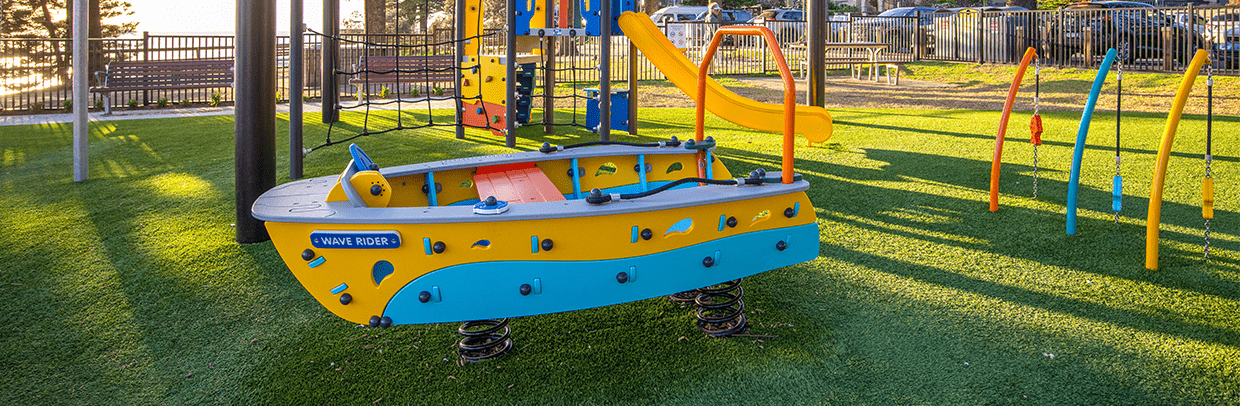
Equipment Designed for the Way Childcare Centres Work
Childcare play equipment needs to withstand heavy daily use from infants, toddlers, and preschoolers in one setting. That makes outdoor play equipment for daycares very different from residential sets and many school layouts. Centres often work with smaller areas, closer supervision, and age groups that need different challenge levels in the same space.
A strong layout usually separates toddler zones from preschool zones so educators can support independent play without losing clear sightlines. Many centres combine Climbing Equipment, shade, and social play features so children can move between active, quiet, and sensory play throughout the day.
Toddler and Infant Play Equipment
Children under three need low-height equipment that supports balance, crawling, stepping, reaching, and simple decision-making. Ground-level activities, tactile panels, crawl tunnels, small ramps, and short transitions help young children test movement ways that match their stage of development.
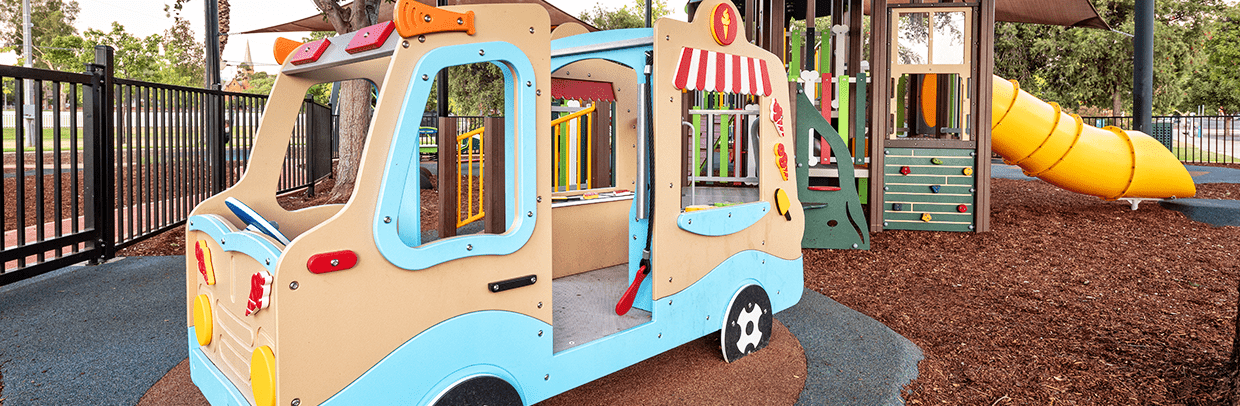
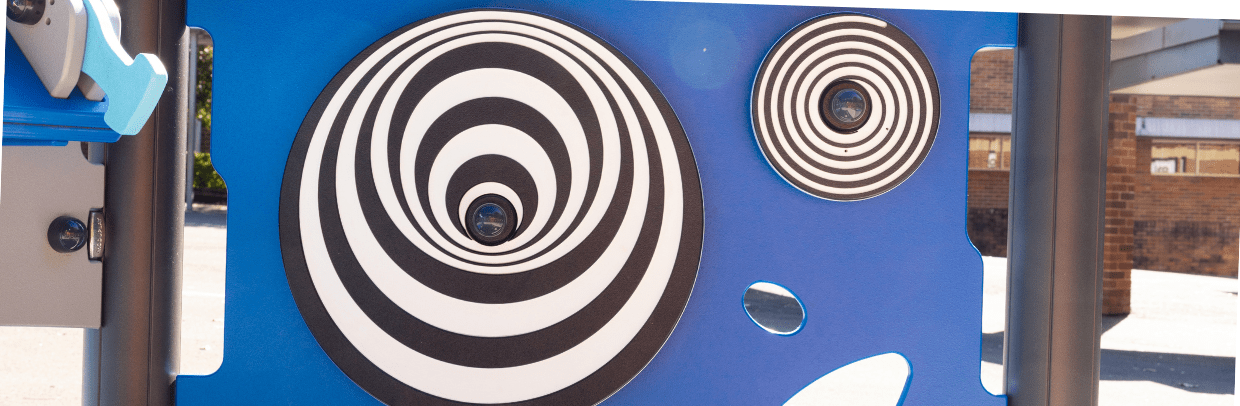
For many centres, toddler zones also benefit from Sensory & Sound Play and compact Role Play & Themed Structures that encourage side-by-side play and allow for easy educator supervision.
Preschool and Kindergarten Play Structures
From age three onward, children usually look for more climbing options, social interaction, and role play. Modular systems such as Connect multiplay units give centres room to combine access points, bridges, decks, slides, and imaginative elements within a single space. These systems allow teams to adjust height, challenge, and circulation so the layout suits the site rather than forcing a fixed configuration.
Preschool zones often include multiplay units, spring play equipment, swings, and town or hut-style play elements that support shared games, route choice, and cooperative play. That flexibility matters in childcare settings because one centre may need a compact courtyard solution while another may require a larger outdoor circuit for four and five-year-olds.
Sensory and Nature Play Elements
Sensory and nature play helps centres extend outdoor learning beyond climbing and movement. Sand & Water Play supports scooping, pouring, turn-taking, and early problem-solving. Nature & Timber Play introduces texture, natural cues, and a quieter pace of play that works well alongside more active zones. When centres add Inclusive Play Equipment, more children can join the same play area through shared ground-level activities and accessible play features.
These elements align closely with the EYLF outcomes. Children build a sense of identity as they explore materials independently and alongside peers. They connect with their environment through natural textures and open-ended play. Sensory activities support wellbeing by encouraging calm, focused engagement, while shared play strengthens communication and social development. Problem-solving, experimenting, and cause-and-effect learning are also link to early learning in science and critical thinking. Educators can use these spaces daily to support intentional teaching while still allowing children to guide their own play.
Compliance and Safety: What Every Childcare Centre Needs to Know
When buyers compare commercial daycare playground equipment, compliance should be one of the first considerations. Childcare outdoor play equipment must do more than appear suitable on paper. It needs to meet the current safety framework, suit the children using the space, and work with the surrounding surfacing and layout.
The AS 4685 series, updated in 2021, sets the current benchmark for playground equipment safety in Australia. Moduplay designs and manufactures its equipment to align with that series. AS 4422 covers impact-absorbing surfacing, so equipment choice and soft-fall planning need to work together from the start. Moduplay can guide centres on compliant surfacing as part of the full project process.
Childcare operators also need to consider the National Quality Standard. Quality Area 3 focuses on the physical environment, which means outdoor areas need to remain safe, well-maintained, and appropriate for the age and ability of the children using them. Permanent playground structures generally fall within the NCC framework for Class 10b structures, so centres should treat AS 4685 compliance as a baseline requirement rather than something optional.
Moduplay supports this process with in-house designers and engineers who prepare technical documentation, coordinate with site requirements, and guide operators through each compliance step before handover.
Regular Inspection and Maintenance Requirements
Compliance does not end at installation. The inspection standard AS 4685.0 sets out routine visual inspections, operational inspections, and annual comprehensive inspections. Centres should plan for record keeping, maintenance, and part replacement from the start rather than waiting for wear to appear. Moduplay supports this process with after-sales guidance, maintenance advice, and spare parts availability for at least 10 years after discontinuation.
Supporting Child Development Through Outdoor Play
When you choose outdoor play equipment for childcare centres, you also choose the developmental outcomes children practise each day. Climbers, swings, balance elements, sensory panels, and role-play zones all influence how children move, think, and interact.
The right mix builds gross motor skills through climbing, balancing, swinging, and jumping, while also supporting fine motor control through tactile panels, sand tools, and water play features. It encourages social and emotional growth as children negotiate turns, join group play, test limits, and recover from small setbacks. That kind of age-appropriate risk helps build confidence and resilience.
Outdoor play also supports multiple EYLF outcomes, with children building independence, communication, imagination, physical capability, and problem-solving through everyday play. Inclusive layouts matter here too. Moduplay equipment helps centres create spaces where children of all abilities can participate, supporting duty of care and more connected group play.
From Brief to Handover: How Moduplay Works with Childcare Centres
Council-grade park play equipment must stand up to daily use, weather exposure, varied age groups, different access needs, and minimal supervision across long service periods. Community playground equipment can scale from compact neighbourhood reserves to larger regional destinations, and Moduplay helps councils select the right mix for each site, budget, and expected level of use.
That approach suits childcare buyers because it reduces back-and-forth between separate suppliers. Moduplay handles delivery and installation Australia-wide rather than simply supplying equipment to the site. Costs vary according to site size, equipment mix, surfacing, shade, and site conditions, so centres usually need a project-specific quote instead of a generic price range.
Some operators also access community or state grant funding for outdoor upgrades. Moduplay can support grant-funded projects by defining scope, equipment schedules, and practical outcomes for the space.
Australian-Made Quality Built for Real-World Conditions
Australian childcare sites expose materials to UV, heat, rain, and constant use. Moduplay selects HDPE panels for durability and low maintenance, powder-coated steel for strength, and sustainably sourced timber for centres that want a more natural finish. These material choices help equipment hold up in demanding outdoor conditions while keeping maintenance manageable over time.
Since 1989, Moduplay has designed, engineered, and manufactured in Australia. That local production supports quality control, reliable lead times, and equipment that suits Australian conditions from the outset.
Frequently Asked Questions
Most centres need age-appropriate equipment for mixed cohorts from infants to five year olds, compliant safety surfacing, and a layout that separates toddler play from more challenging preschool play. Sensory play, role-play, climbing, and active movement equipment also help centres support EYLF learning and Quality Area 3 requirements.
Yes. Permanent outdoor structures in childcare settings need to align with the AS 4685 safety framework and the AS 4422 surfacing standard. Centres also need outdoor environments that remain safe, well-maintained, and suitable for the children who use them.
Timeframes vary according to site conditions, equipment scope, surfacing, and installation complexity. Moduplay manages the process from design to handover, so centres can request a project-specific timeline during the quoting stage.
Commercial equipment is designed for heavy daily use, mixed age groups, and stricter compliance requirements. Residential equipment does not suit licensed childcare centres because it does not address the same standards, supervision demands, or long-term wear.

 One login across our websites