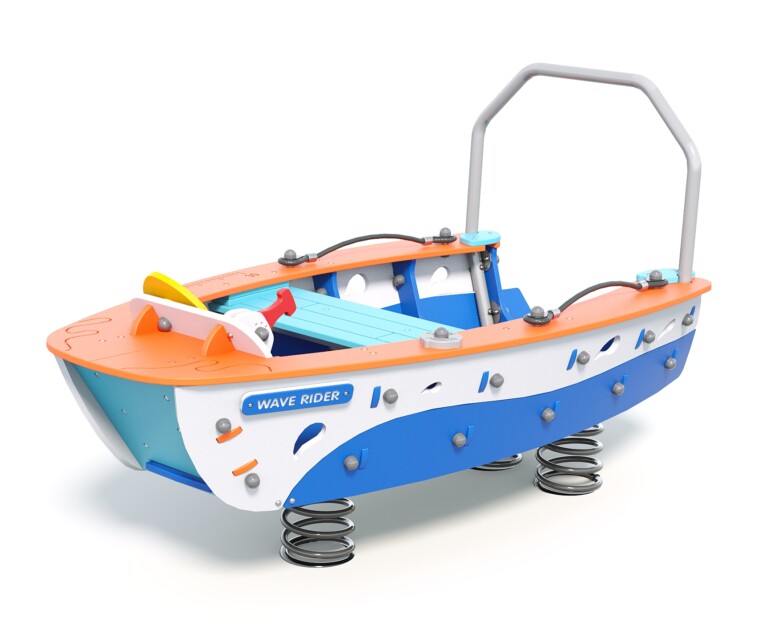
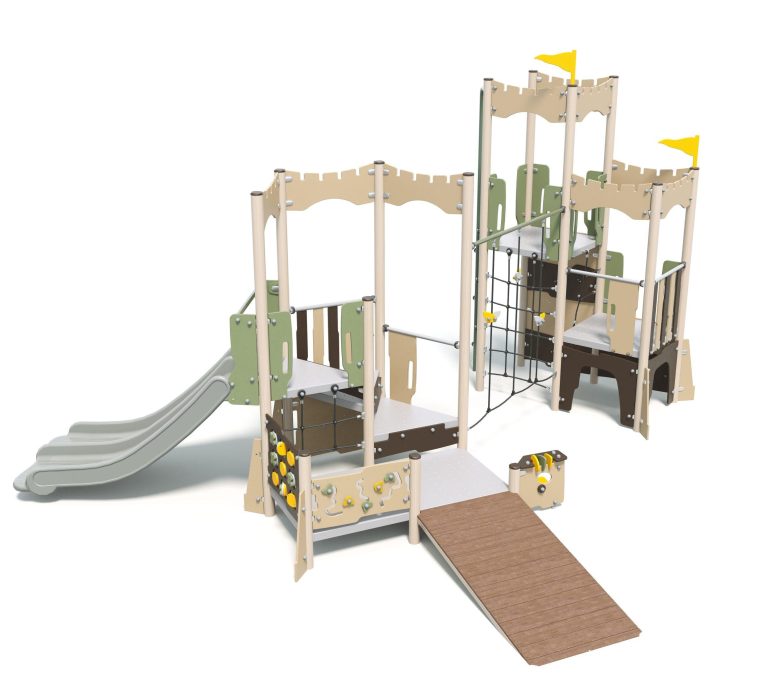
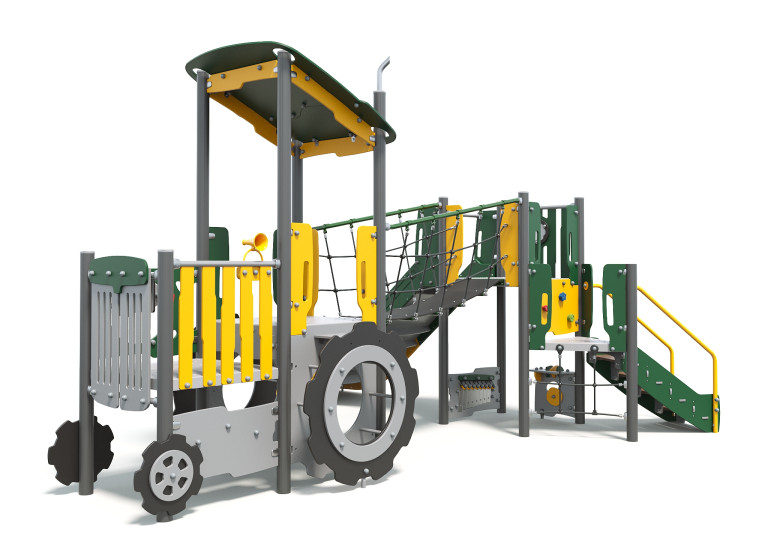
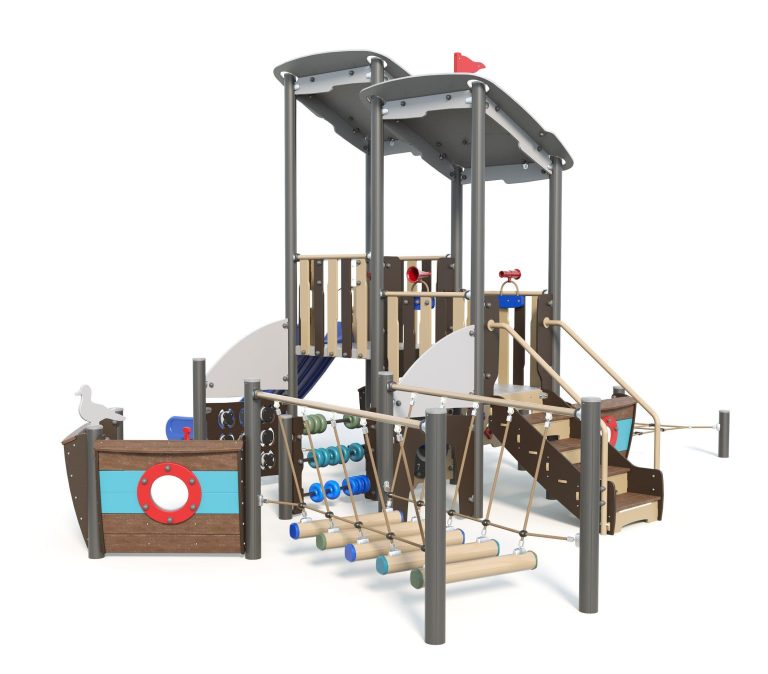
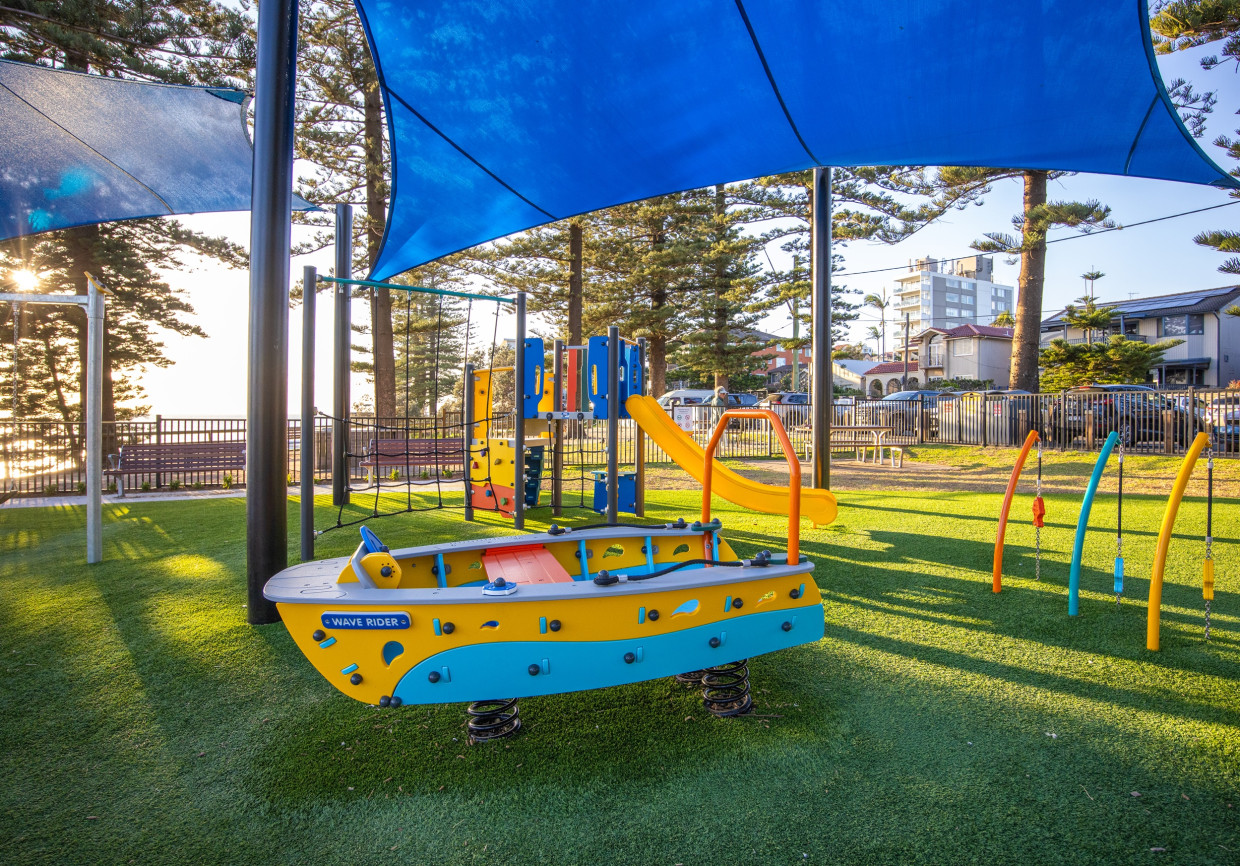
Wave Rider Rocker
Zoom across the waves of imagination with the Wave Rider Rocker! This thrilling speedboat-themed rocker invites kids to embark on…
Theme in a playground is one design choice that completely changes the way a child connects to a space. At its best, the theme isn’t about decoration; it is about story, familiarity, and belonging. It’s the difference between a playground that gets a quick visit and one that a child asks to return to again and again.
At Moduplay, we’ve seen firsthand how powerful this connection can be. Today, thanks to Connect, playground theming is more flexible than ever. If there’s a story, place, or idea that resonates with your community, we can help bring it to lifewhile still prioritising all the things good play is about.
Children today spend less time outdoors than any generation before. Many of the spontaneous, outdoor play experiences that once filled afternoons have been replaced by screens and structured activities. This makes connection to place more important than ever.
When a playground resonates with children, it becomes more than equipment. It becomes somewhere they want to stay, explore, and return to. That connection encourages longer play sessions, more physical engagement, and richer social interaction.
Theme also plays an important role emotionally. For children who may be shy or hesitant, themed elements can act as a gentle bridge. A familiar object, story, or setting can start a conversation and help children feel included. Theme creates a shared experience where everyone starts on the same level.
When theme is thoughtfully integrated, it shapes how children experience play, creating spaces that feel engaging, inclusive, and meaningful.
Theme gives movement context. When climbing, balancing, or navigating becomes part of a story, children are more likely to challenge themselves, repeat movements, and stay active for longer. Play feels purposeful rather than prescribed.
Shared themes create instant common ground. A familiar story, object, or setting encourages conversation, cooperative play, and inclusive interaction. Particularly for children who may struggle to find their place or be hesitant to join in.
Recognisable themes help children feel comfortable in a space more quickly. When a playground reflects familiar places or ideas, it builds confidence, encourages exploration, and supports emotional wellbeing through a sense of belonging.
Theme invites children to create their own narratives. Role play, problem solving, and creative thinking naturally emerge as children interpret the space in different ways, supporting cognitive development alongside physical play.
There are many ways to add theme to a playground, some can be subtle colours or the whole playground can revolve around one shared theme.
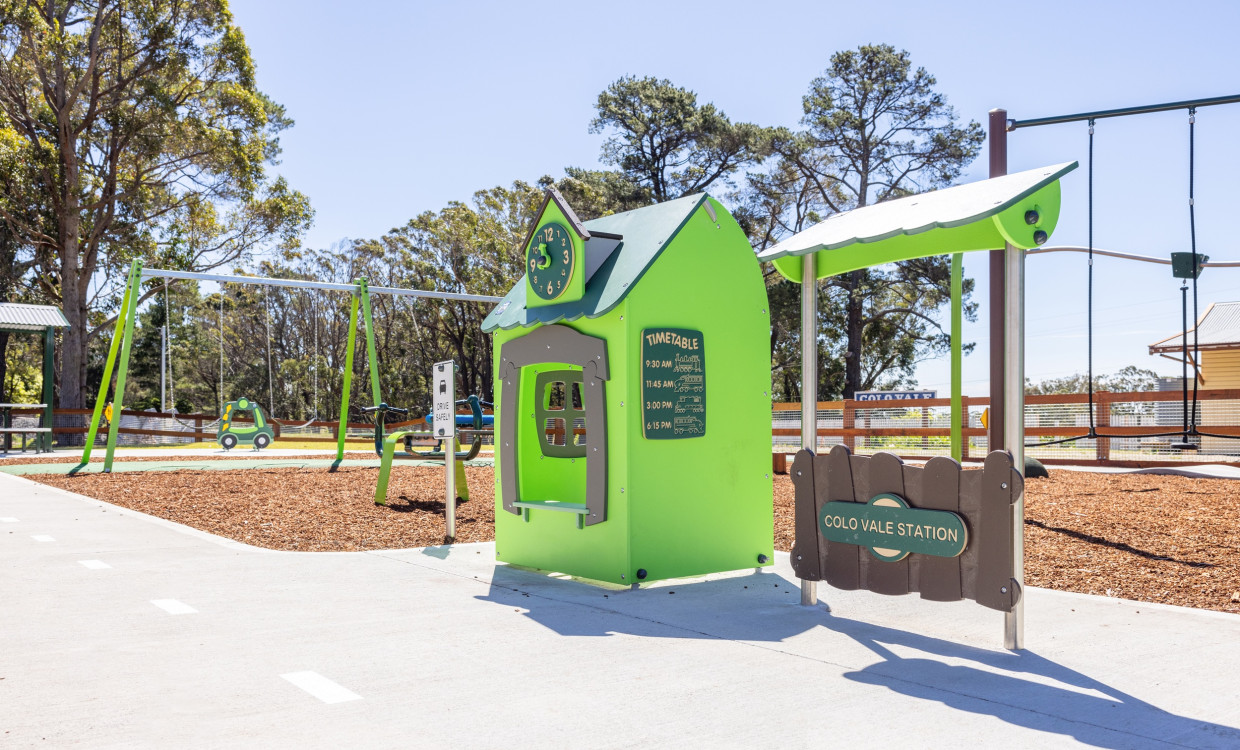
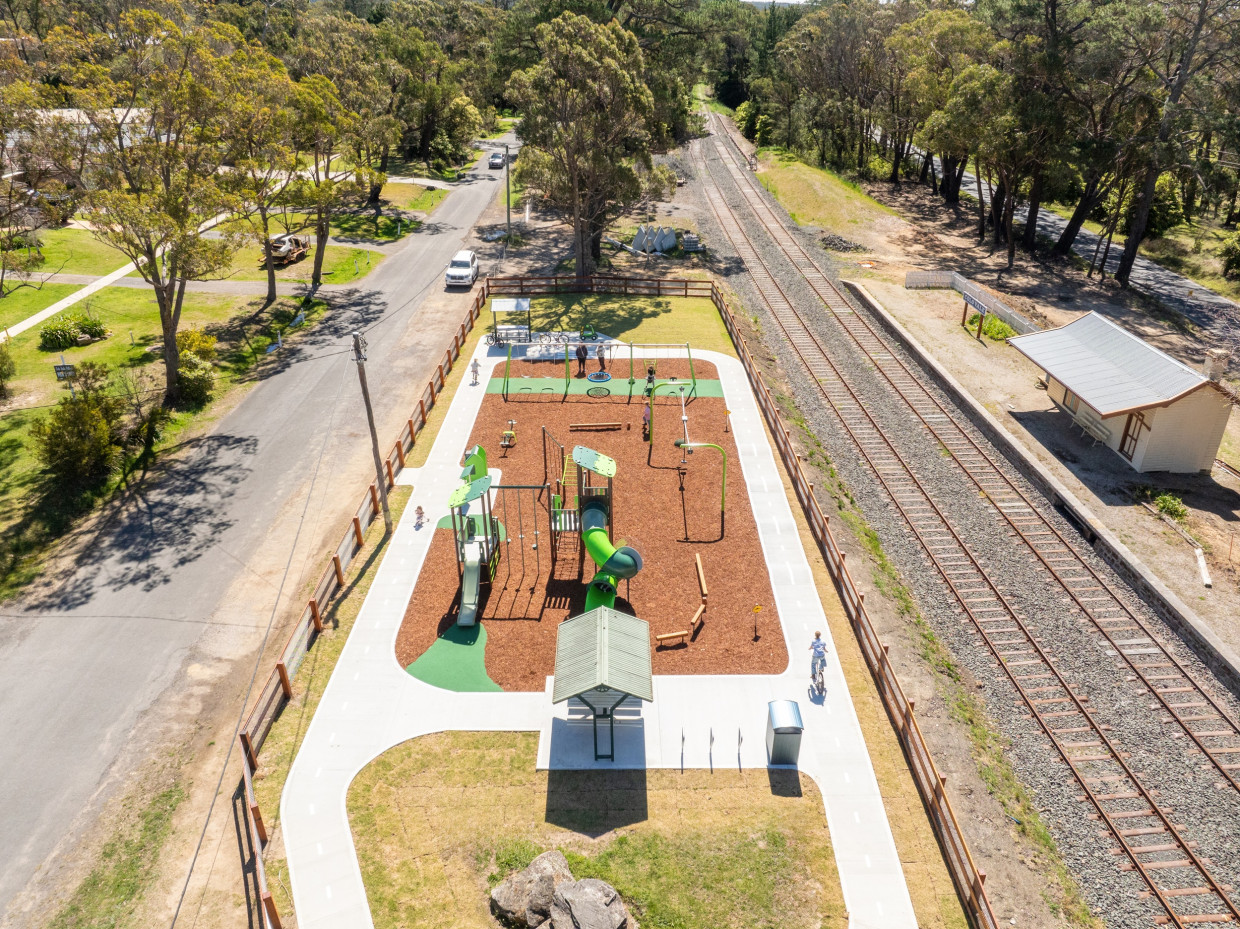
The playground at Colo Vale sits alongside the original rail line that once connected the town to the wider region. The challenge was to acknowledge this history without turning the site into a novelty attraction. Working with Wingecarribee Shire Council, the brief focused on movement, accessibility, and everyday community use.
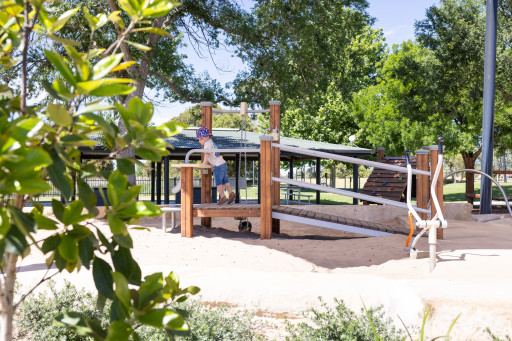
The design incorporates subtle references to the town’s railway story while maintaining a clean, contemporary layout. Clear sightlines, low platforms, and all-ages access points make the space easy to navigate, while climbing, balancing, and coordination elements encourage active play within a compact footprint.
Rather than dominating the space, theme acts as a quiet storyteller. It connects past and present, giving families a playground that feels modern, practical, and grounded in local identity.
With most Australians living within 50 kilometres of the coastline, the beach and ocean are deeply familiar reference points. That’s why ocean-inspired colours, forms and motifs appear so often in playground design, not as decoration, but as connection.
When children recognise elements of the world around them, they feel more comfortable and confident in a space. That sense of familiarity supports a child’s holistic development, encouraging longer, more active play and making it easier for children to explore, interact and take social risks.
Over time, these shared visual stories help anchor a play space within its community. This all effectively reinforces identity, belonging and a stronger connection between place and play.
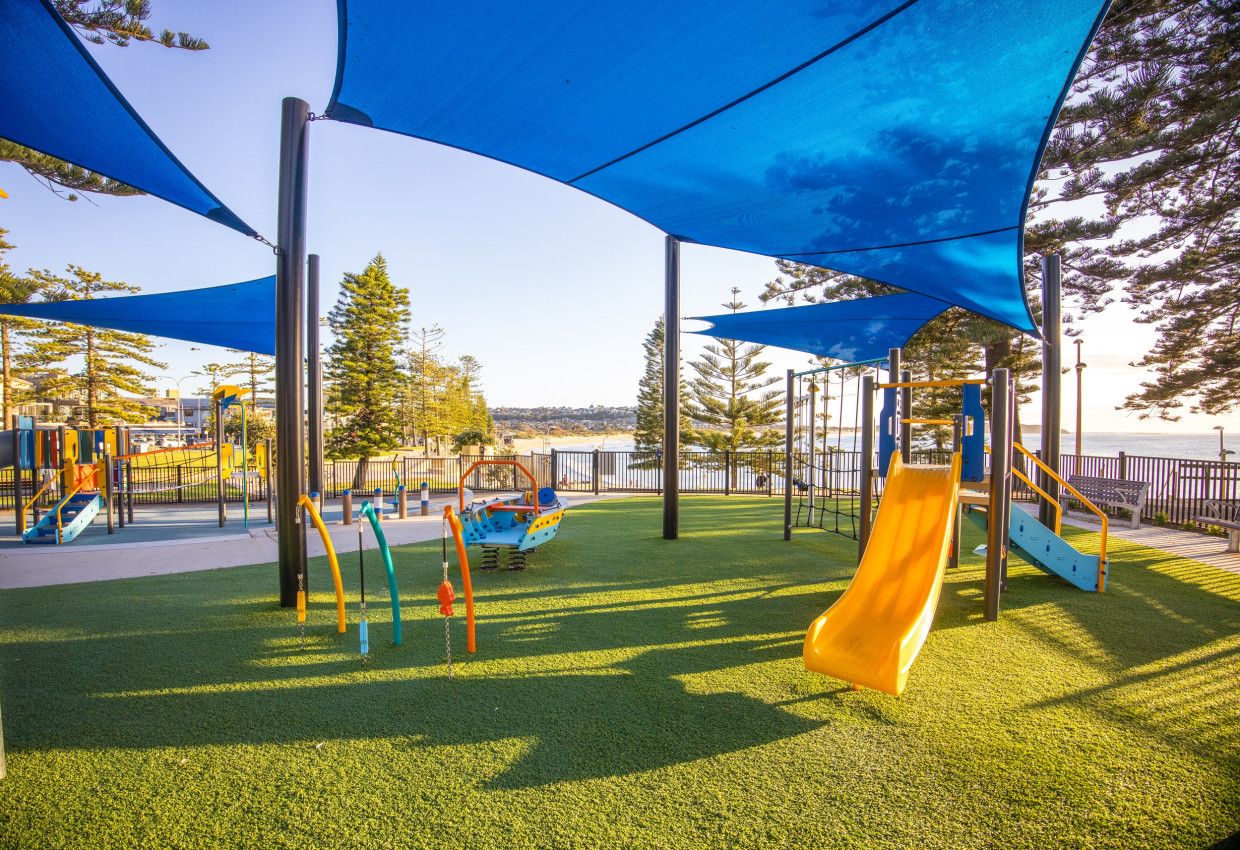
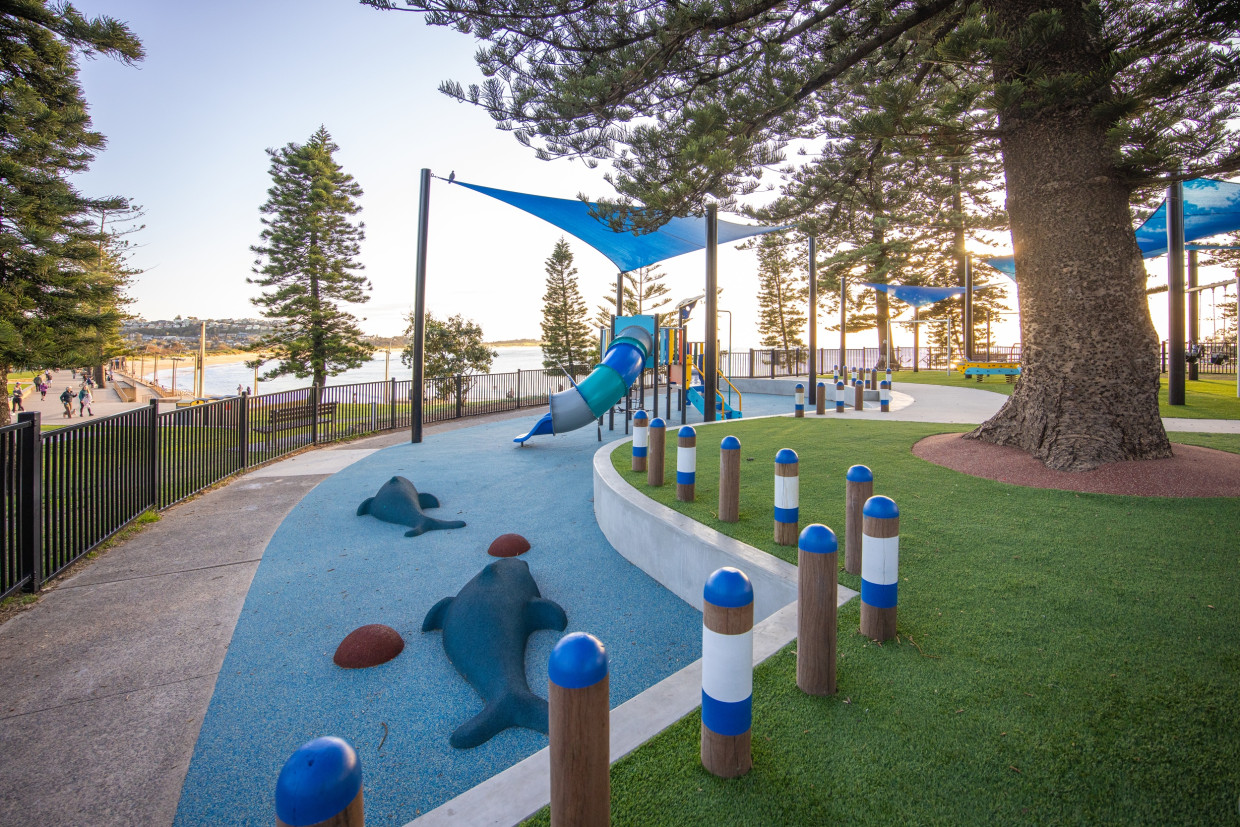
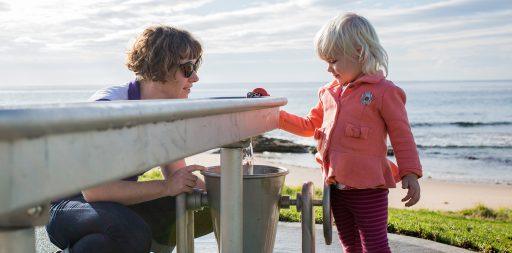
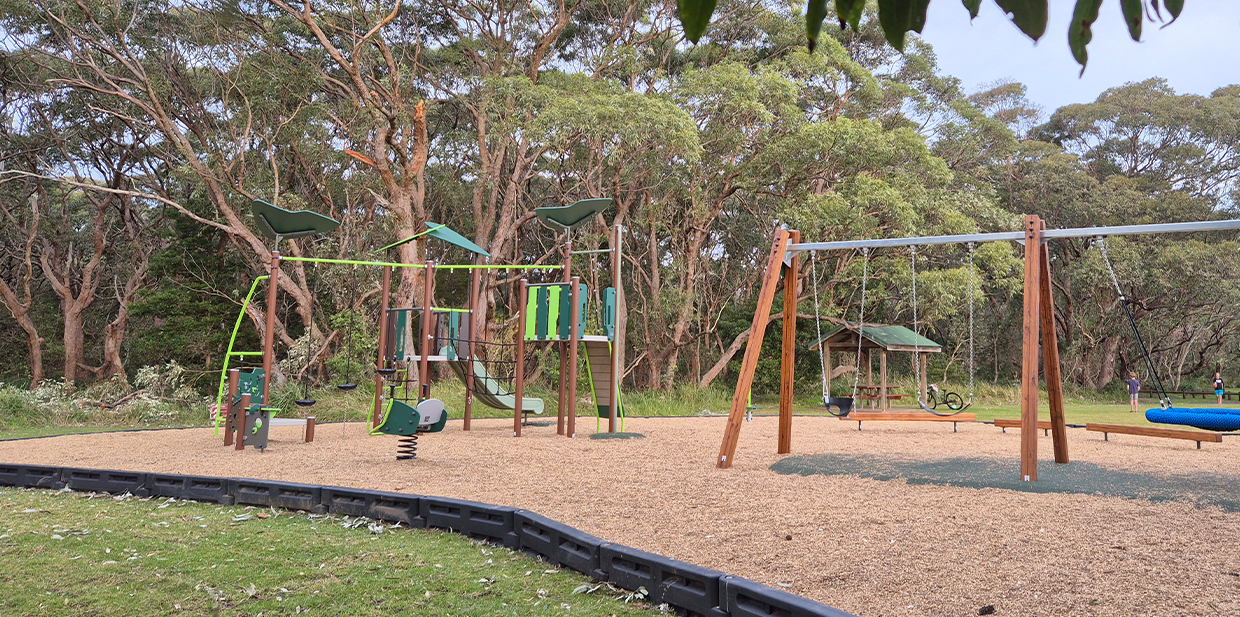
Located in Sydney’s Northern Beaches, Michaela Howie Playspace was designed around what locals know and love. The playground showcases surf life saving colours, with ocean blues and sea motifs woven throughout to reflect the coastal setting and create an immediate sense of connection.
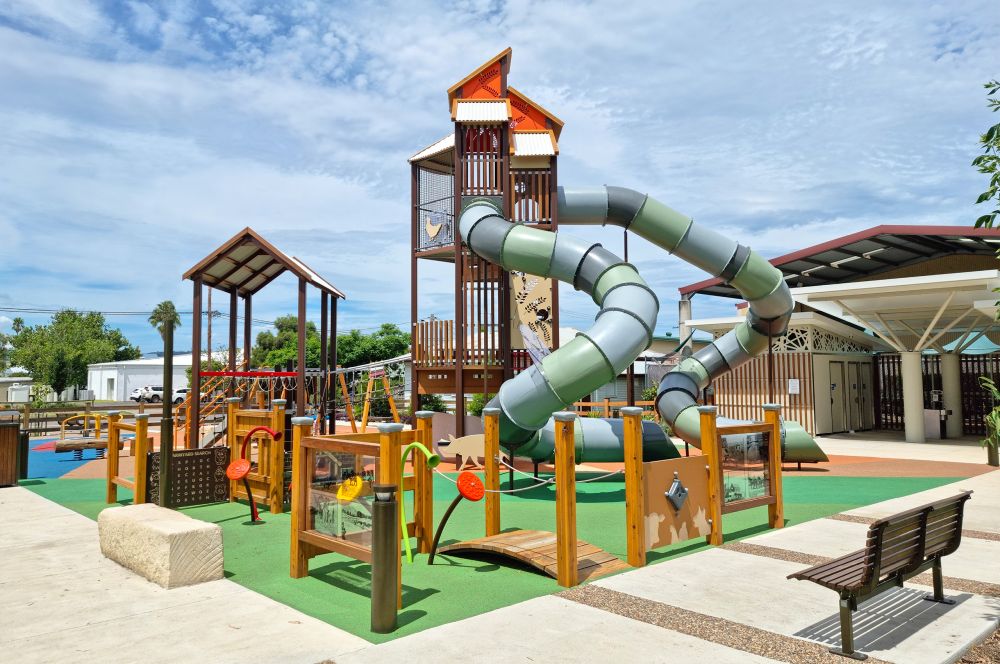

Denman Memorial Park implemented agricultural references that are subtly embedded throughout play elements and finishes, creating a playground that feels locally grounded and welcoming.
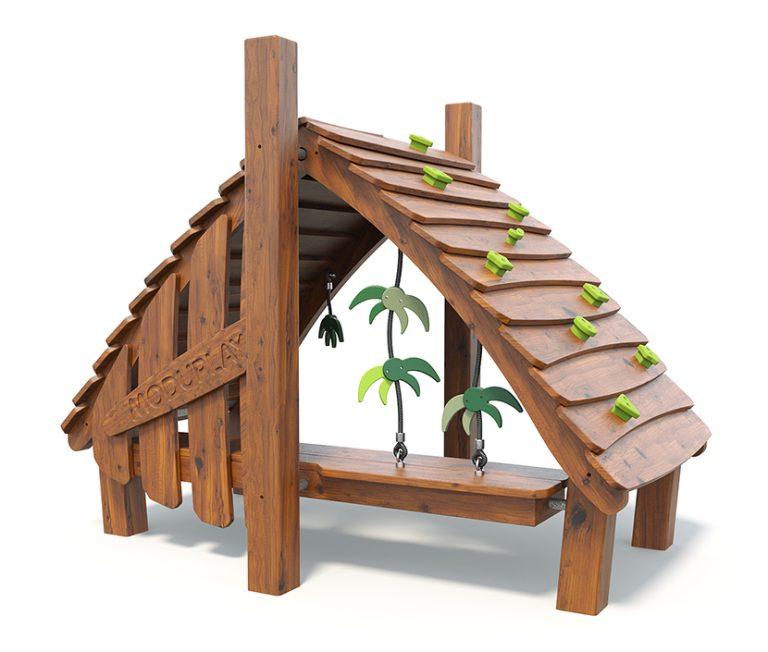
Bungendore Park uses theme to elevate play. Blending adventure strucutures, natural materials and movement based elements into a cohesive desitnation that genuinly connects to the community
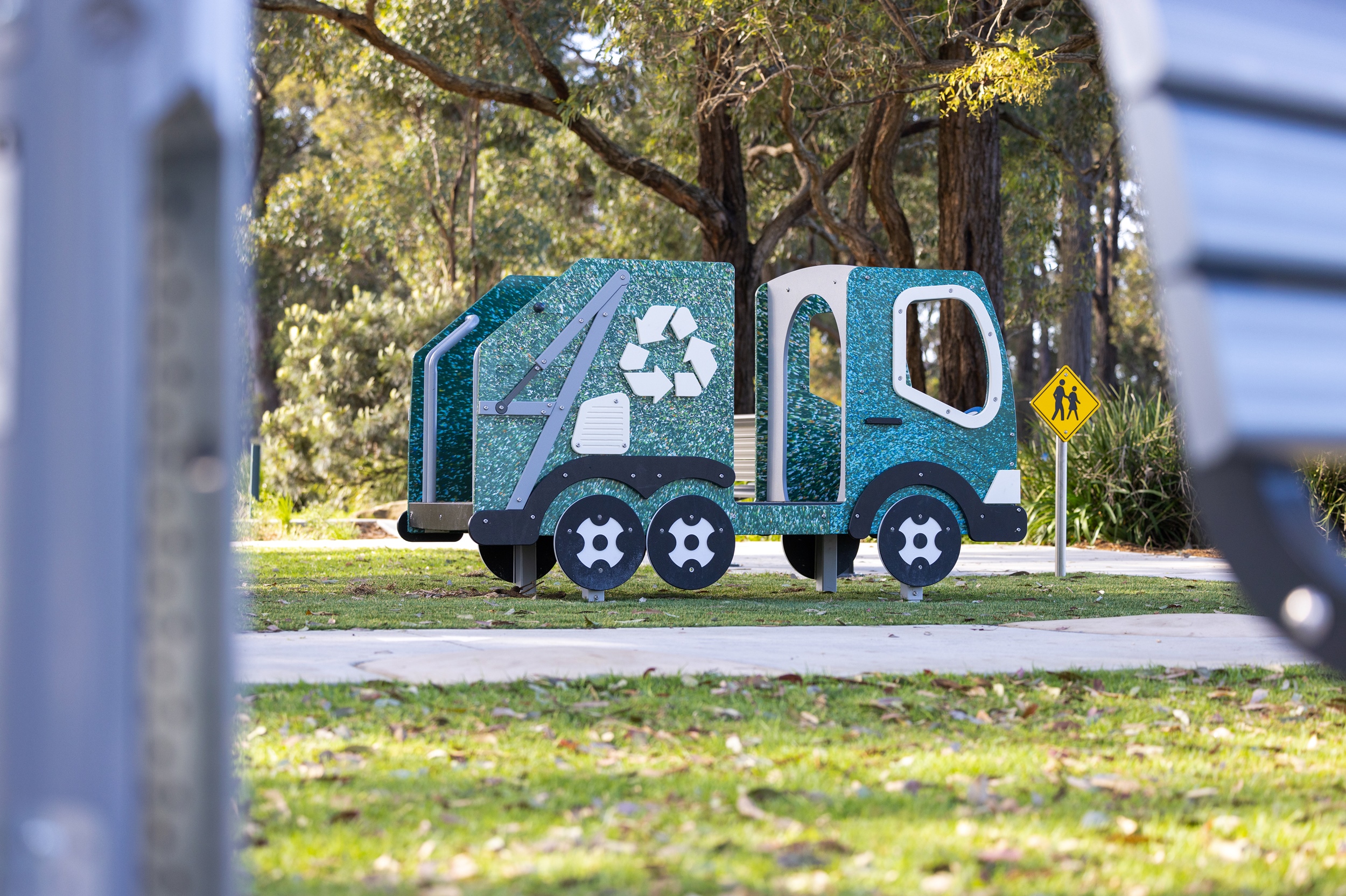
Appin Park uses theme as an educational tool, with a recycled recyling truck that children instantly recognise. The familiar form opens natural conversations about waste and sustainability.
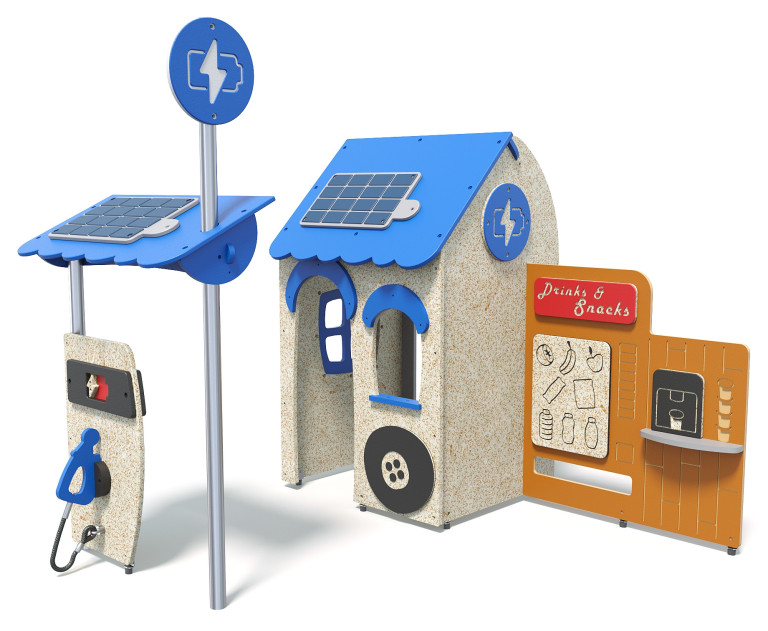
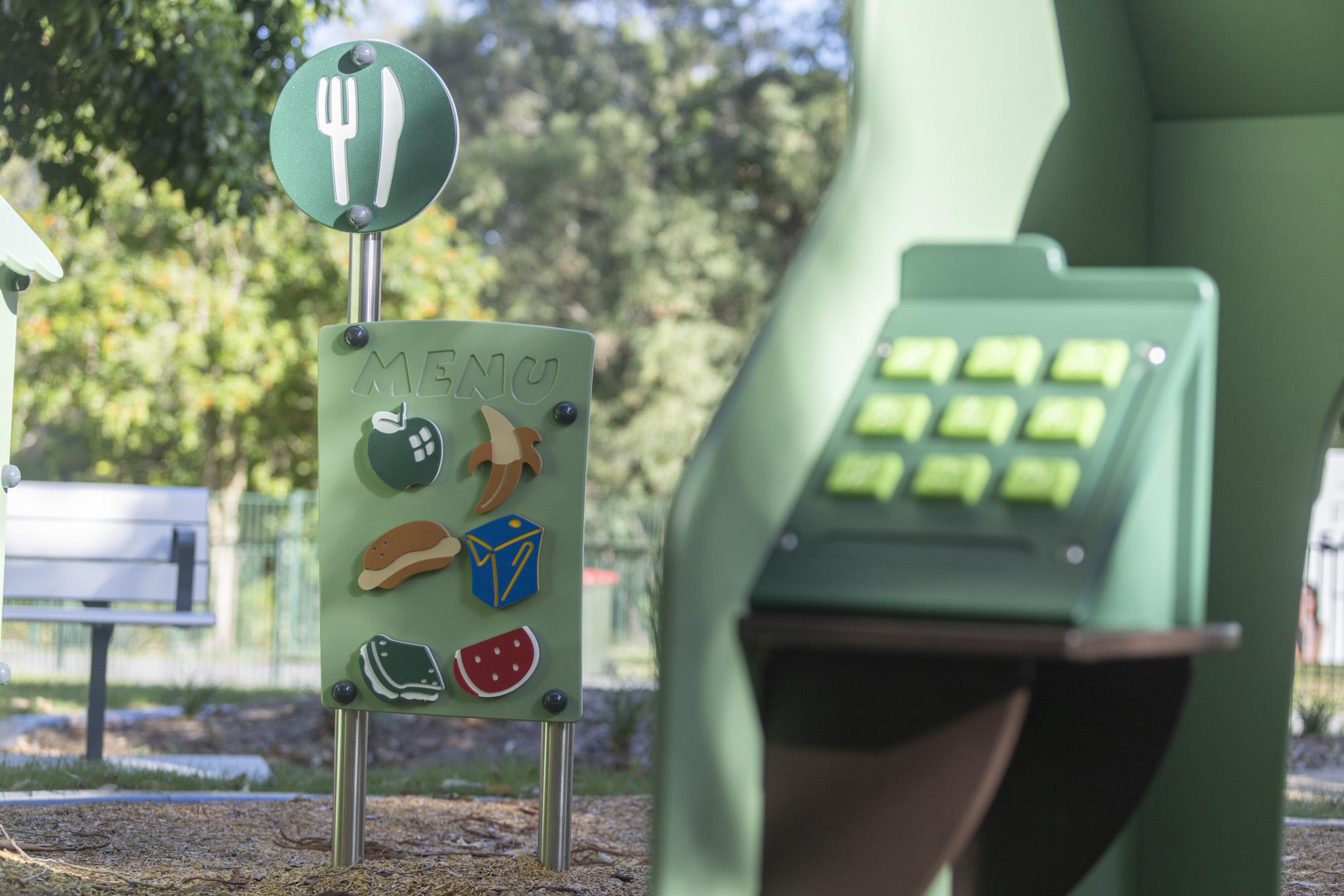
Mingoola Park brings familiarity through everyday experience, incorporating grocery shop theming that children immediately understand.
About Moduplay
The Moduplay Group is a provider of Australian-made commercial play and outdoor fitness equipment that focuses on creating world-class intergenerational play spaces that challenge, invigorate, and strengthen the physical and mental well-being of children and adults alike. For more than 35 years, Moduplay has been actively involved in the design, engineering, and manufacturing of its products in Australia, with projects installed across all 6 states, 2 territories, and in over 10 countries around the world.
Get design inspiration, business tips and new product alerts straight to your inbox with our Moduplay Newsletter, the Playground Press once every two months.
A themed playground uses a unifying story, concept, or local reference to guide the design, colours, forms, and play elements, creating a more cohesive play experience.
No. When done well, theming enhances play without restricting physical, social, or cognitive outcomes. The theme should support play, not override it.
Strong themes often come from local history, landscape, ecology, or community stories, ensuring relevance and long-term appeal. To get started, speak to one of our Play Design Consultants today.
Not necessarily. Theming can be achieved through layout, colour, naming, and selected custom elements without increasing overall project cost.
Theming can increase engagement, support imaginative play, strengthen community identity, and help a playspace feel unique rather than catalogue-driven.
Yes. Many successful themed playgrounds use abstract or interpretive themes rather than character-based or highly literal designs.
Yes, Moduplay provides professional installation services for playground equipment across Australia, ensuring a seamless and safe setup.
Yes! As a trusted playground equipment supplier, Moduplay has tackled a wide range of projects across different industries. We deliver end-to-end playground solutions, from initial design to site assessment and layout planning. Our expert team will help you optimise your available space. Learn more about our process in the Play Journey guide.
Register for a Moduplay account to see pricing on 500+ Australian Made products!
Example:
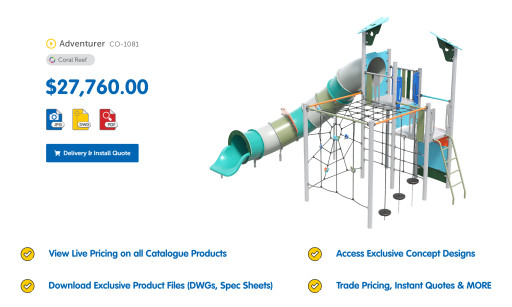
*Price on display image for illustration purposes only and isn’t reflective of actual price of CO-1081
Register for a Moduplay account to see pricing on 500+ Australian Made products!